
The Biggest Crypto Hacks from 2016 to 2026

Author
Marzieh Mazaheri
Published
 2026/08/23
Updated
2026/10/04
Reading time
5 دقیقه


In the crypto market, a single security flaw can turn into a billion-dollar loss in just a few minutes. Over the past decade, crypto exchanges and protocols have repeatedly been targeted by attacks that wiped out hundreds of millions or even billions of dollars within minutes.
From historic hacks of exchanges in the early years of this young industry to sophisticated exploits of smart contracts and DeFi protocols, attackers' methods have evolved alongside the industry's growth. Today it is no longer just about stolen assets; every attack can also target users' trust and a project's credibility.
In this article, we look at the biggest crypto hacks from 2016 to 2026 : attacks that not only wiped out enormous sums but also changed the course of security in the crypto industry.
A summary of crypto attacks in 2026
2026 brought a worrying pattern to the crypto market: major attacks not only continued but also happened in quick succession. Of all the months, April accounted for the largest share of recorded losses; a month in which two heavy attacks, just a few weeks apart, drew the market's attention to the vulnerability of DeFi infrastructure.
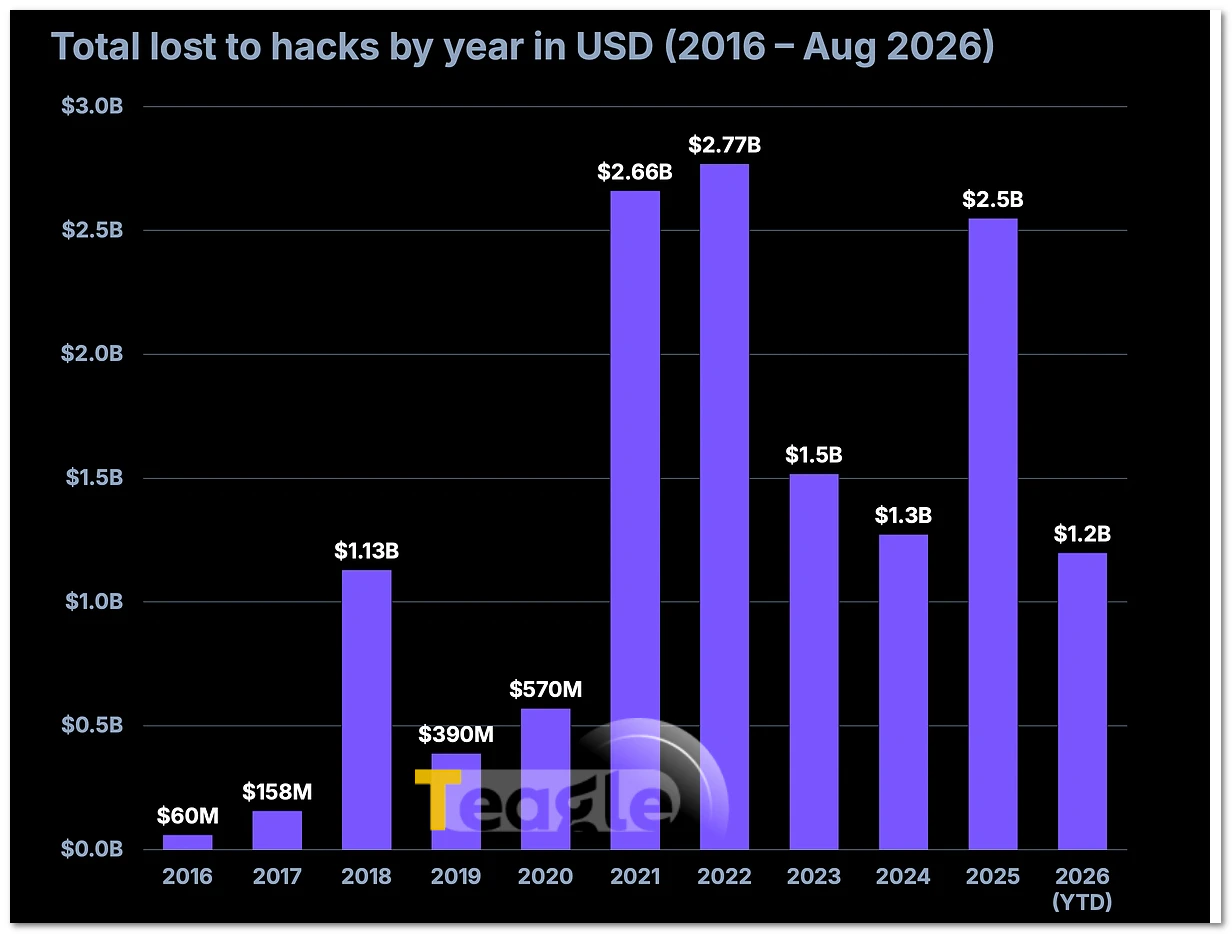
In April, total losses from attacks reached about $644.9 million , a figure that accounts for more than half of the losses recorded in the first seven months of the year. On 1 April, the Drift Trade protocol was attacked and lost about $295 million. Just over two weeks later, on 18 April, it was the turn of Kelp , and the attackers caused about $293 million in losses. Later investigations showed that both attacks, despite differences in execution and attacker group, have been attributed to North Korea-linked hackers.
But the Kelp incident was not just a major theft; the attack set off a chain of consequences across the DeFi ecosystem. By exploiting a vulnerability in Kelp's LayerZero bridge, the attackers minted about $293 million in unbacked rsETH tokens. They then deposited these tokens as collateral on Aave and borrowed real assets against them.
The fallout did not stay with Kelp. The total value locked (TVL) in Aave, which before the attack stood at about $25.93 billion , fell within two days to $21.80 billion . Outflows continued afterwards, and by 21 July the protocol's TVL had reached $14.40 billion; that is, about 44.5 percent below its pre-attack level.
|
Year |
Total funds lost |
Number of incidents |
|
2016 |
$60 million |
— |
|
2017 |
$157.7 million |
— |
|
2018 |
$1.13 billion |
— |
|
2019 |
$390 million |
— |
|
2020 |
$570 million |
17 |
|
2021 |
$2.66 billion |
71 |
|
2022 |
$2.77 billion |
67 |
|
2023 |
$1.52 billion |
97 |
|
2024 |
$1.27 billion |
94 |
|
2025 |
$2.55 billion |
97 |
|
2026 (to date) |
$1.2 billion |
164 |
This incident clearly shows that in DeFi, a vulnerability can have an impact far beyond the project that was directly targeted. A flaw in a single bridge can spread to lending, liquidity and even user trust in other parts of the ecosystem.
What happens to governance tokens after a hack?
Stolen funds may not be the end of the story; sometimes the market multiplies the damage of a hack.
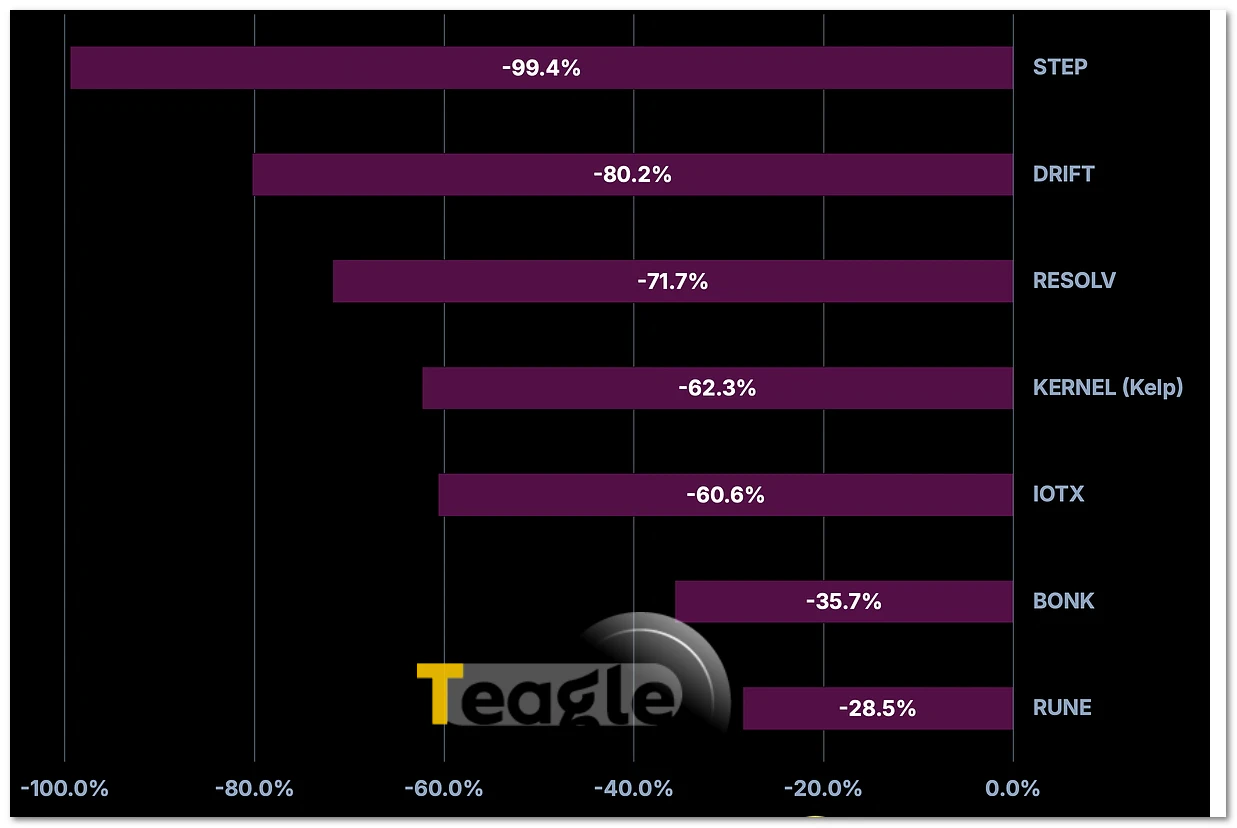
Cyberattacks usually cause a second round of losses that falls directly on governance token holders. Even if a user's funds were not directly lost in the attack, collapsing trust and rising selling pressure can sharply reduce the value of their holdings.
Step Finance is one of the clearest examples of this. The exploit ultimately drove the protocol into bankruptcy and the project shut down. The STEP token also lost almost all of its value and, with a 99.4% drop, effectively suffered one of the heaviest crashes on this list.
In the case of Drift and Resolv, the protocols are still active, but their native tokens have not yet managed to recover a significant part of their lost value. Since the 1 April attack, the DRIFT token has fallen by about 80.2% , and RESOLV has dropped since May by 71.7%.
But perhaps the case of BONK best shows that the market's reaction can sometimes be costlier than the amount stolen. In the 6 July attack, a malicious governance vote drained about $21.3 million from the BonkDAO treasury; yet after this incident, BONK's market cap fell by about $138.65 million.
This gap between the amount directly stolen and the market value lost highlights an important point: in the crypto ecosystem, trust is itself an economic asset. When a protocol is hacked, investors are not only worried about the lost money; they also start doubting the project's security, the team's ability to manage the crisis and the token's future.
It is worth noting that the data in this report have been compiled and calculated using information from REKT/DeFiWatch, DeFiLlama and CoinGecko. The 2026 figures cover the period up to 5 August and are not a full-year total; also, the governance token analysis includes only assets with a standalone, tradable token.
What lessons do the biggest crypto hacks hold for investors?
Looking back at the major crypto hacks of the past decade shows that the risk of investing in crypto is not limited to price volatility. Exchange security, a project's track record, the structure of its smart contracts, how assets are held and even how a crisis is handled can all affect the safety of your funds. So before choosing a platform or protocol, checking its security record and protection mechanisms matters as much as looking at its returns and features. In a market where a single vulnerability can quickly turn into a billion-dollar loss, understanding risk is an inseparable part of making informed decisions. On Teagle , you can review the leading, active crypto platforms and compare them to choose the best option for you.
Contents of this article


Related articles



User reviews

Newest
 Upload image