How Does Inflation Affect Financial Markets?

Author
Admin
Published
 2026/04/12
Updated
2026/10/31
Reading time
5 دقیقه


Economic inflation, as one of the most important macroeconomic phenomena, not only sharply reduces household purchasing power but also has a direct impact on various financial markets (the stock market, forex, etc. …). In Iran's economic conditions, where the inflation rate is high, people face a serious challenge in preserving the value of their assets. That is why the question always comes up: «What should we buy during inflation, and how should we invest?»
In this article, we first explain in simple terms what economic inflation is and how it works. Then we analyze its direct effects on various financial markets, and finally, we offer practical solutions for financial management and building an asset portfolio in Iran.
What Is Economic Inflation? (A Simple Definition)
Economic inflation means a continuous, widespread rise in the prices of goods and services. When inflation occurs, the money in your pocket no longer has the same purchasing power as before. For example, suppose that today you can buy a basket of essential goods such as bread, milk and eggs with 100 thousand Toman. If inflation occurs, next month the same basket might cost 120 thousand Toman or more; that is, the same amount of money as last month can no longer put the same number of goods in your basket.
Keep in mind, however, that economic inflation is not merely a temporary increase in the price of a few specific goods; it is a continuous, macro-level and widespread trend that affects all sectors of the market. In economics, this phenomenon is usually measured with an index called the «Consumer Price Index» (CPI), and it occurs for 3 main reasons:
- Growth in the money supply and liquidity: More money printed without the backing of production
- Rising production costs: More expensive raw materials, wages or energy for factories
- Structural and environmental factors: Such as political tensions, war and sanctions
The Impact of Inflation on the Economy and Purchasing Power
From the very start, economic inflation targets the social layers of society and disrupts people's daily lives. The greatest harm falls on low-income groups and salaried employees on fixed wages, whose purchasing power drops sharply. When housing, clothing and food prices rise by 30 to 40 percent (or even more) every year, families are forced to give up their basic needs; a phenomenon that deepens social inequality and puts heavy psychological pressure on people. This social damage quickly spreads to the wider macroeconomy and brings the following consequences:
- Less productive investment: Because the future is unpredictable, the willingness to make long-term investments in production disappears.
- Pressure on producers: Rising prices of raw materials and operating costs severely erode factories' profit margins.
- Stagflation: Alongside rising prices (inflation), the economy faces a freeze in the cycle of production and purchasing (recession).
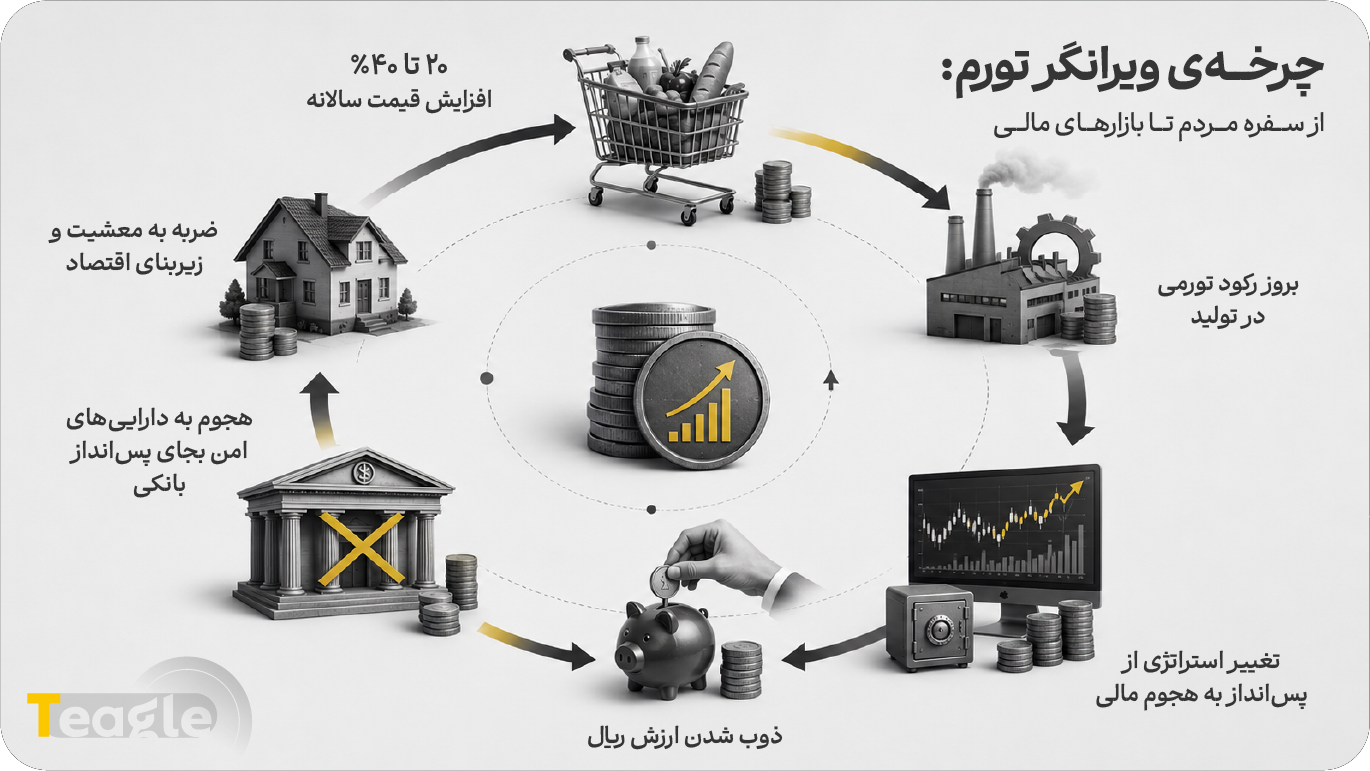
Ultimately, this destructive cycle shows itself in the financial markets, where the value of the national currency (the Rial) melts away quickly. In such conditions, safe assets such as gold, gold coins, real estate and foreign currencies become the last havens for capital. This phenomenon forces traders and ordinary people to change their strategies and, instead of keeping their money in bank savings accounts, to rush into the financial markets to stay financially afloat.
The Effect of Inflation on Different Financial Markets
Inflation does not affect all financial markets equally. Some markets are highly resistant to inflation, while others undergo negative changes and experience a steep decline. These differences depend directly on the nature of the assets:
- Real assets such as housing and gold, which have intrinsic value, usually grow in step with inflation or even beyond it.
- Fixed-income financial assets (such as bonds or bank deposits) are highly vulnerable.
-
In addition, the relationship between markets and inflation is not always linear; in the short term, inflationary shocks and concerns may cause markets to fluctuate and fall, but in the long term, capital always flows toward protected assets such as gold and the dollar in Iran. The key point is that choosing the right market in inflationary conditions is the only way to save and protect the value of your capital.
Inflation in the Housing Market
The housing market is known as one of the most traditional and resilient safe shields against inflation. When inflation rises, construction costs rise too; that is, the prices of materials, land, wages and transportation go up, and as a result, the prices of homes and property rise as well. On the other hand, in the rental market, rents generally increase with inflation so that the property owner's capital keeps its value. This is why housing, in addition to a possible rise in price, can also generate income for the owner through rent. For the same reason, in the long term, investing in housing usually helps preserve the purchasing power of capital better than keeping money in bank deposits or low-risk assets.
However, in the short term, housing behavior is influenced by business cycles and the phenomenon of «stagflation». In Iran's economy, inflationary surges caused by sanctions and negative expectations from the late 1390s to the mid-1400s first sent nominal housing prices soaring, but in the next step pushed the market into a phase of deep recession. In other words, housing prices saw strong growth over a short period. But after this price surge, due to people's reduced purchasing power and falling demand, the market entered a period of recession; so that despite high prices, the number of transactions decreased and buying and selling homes slowed down.
The behavioral cycle of housing in response to macroeconomic shocks can be summarized in 3 layers:
- The surge and inflation-absorption period: When currency shocks occur and sanctions intensify, inflationary expectations are quickly priced into the property market and investors take refuge in this market to escape the falling value of the national currency, resulting in sharp jumps in nominal housing prices (not the actual prices at which people trade).
- The adjustment period and fall in real prices: At times when inflationary expectations subside (such as periods of temporary political openings or relative currency stability), real housing prices decline due to the absence of new drivers.
- The recession trap and reduced liquidity: When the inflation rate outpaces income growth in society, the purchasing power of end-user buyers is severely suppressed. In this situation, the market falls into a deep transaction slump and the asset's liquidity drops to a minimum.
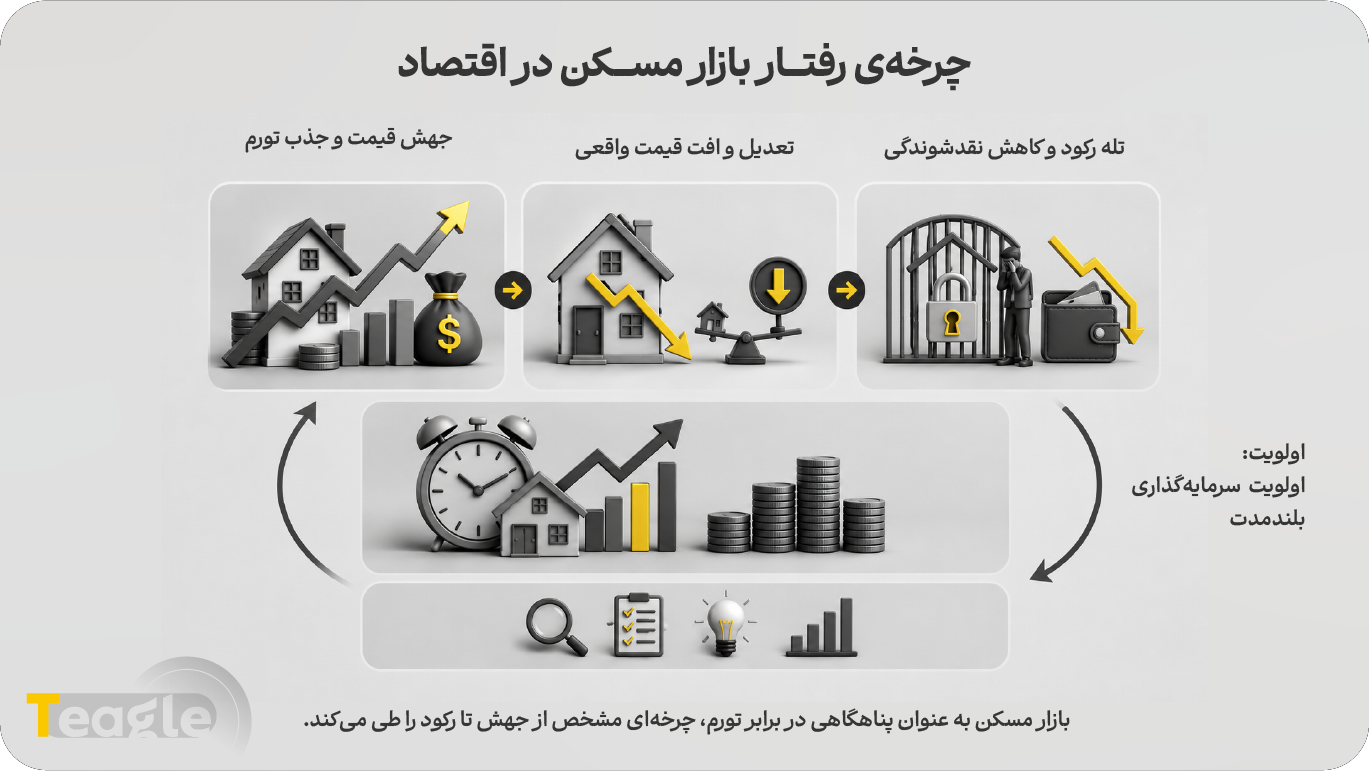
From the standpoint of economic analysis, housing is an excellent anti-inflation haven for «preserving the value of capital in the long term»; but due to sticky prices, heavy dependence on society's purchasing power and frozen transactions during stagflation, it is not a suitable tool for swing trading or short-term investments.
Inflation in the Stock Market
The stock market does not always react the same way to inflation, and its performance depends on the country's economic conditions as well as the situation of public companies. In general, stocks are considered a type of real asset, because listed companies own assets such as land, buildings, machinery and goods, and as inflation rises, their value generally increases too. Also, in many cases, as prices rise across the economy, companies' revenue and sales increase as well. If revenue growth leads to higher profitability, it can drive up share prices on the stock exchange. That is why some investors consider the stock market one of the options for preserving the value of capital against the declining purchasing power of money.
However, in the real economy, this relationship between the stock market and inflation is not always linear and changes under the influence of the following factors:
- The stagflation trap and cost pressure: If inflationary shocks are accompanied by an economic recession, companies come under pressure from two sides:
-
1. Production costs (raw materials, wages and energy) jump sharply.
2. Because society's purchasing power is suppressed, companies cannot fully pass these costs on to final selling prices.
In such conditions, industries' real profit margins shrink and financial markets fall.
- Contractionary policies and interest rates: To curb inflation, governments usually turn to raising bank interest rates. Such a policy makes financing more expensive for companies and, by making risk-free assets more attractive, drives liquidity out of the capital market.
- Long-term horizon: Over the long term (a 5 to 10 year period), the stock market has traditionally tended to outperform other parallel markets, because over this period «the operational growth and expansion of companies» combines with «inflationary adjustments to asset values», creating leveraged, compounded returns.
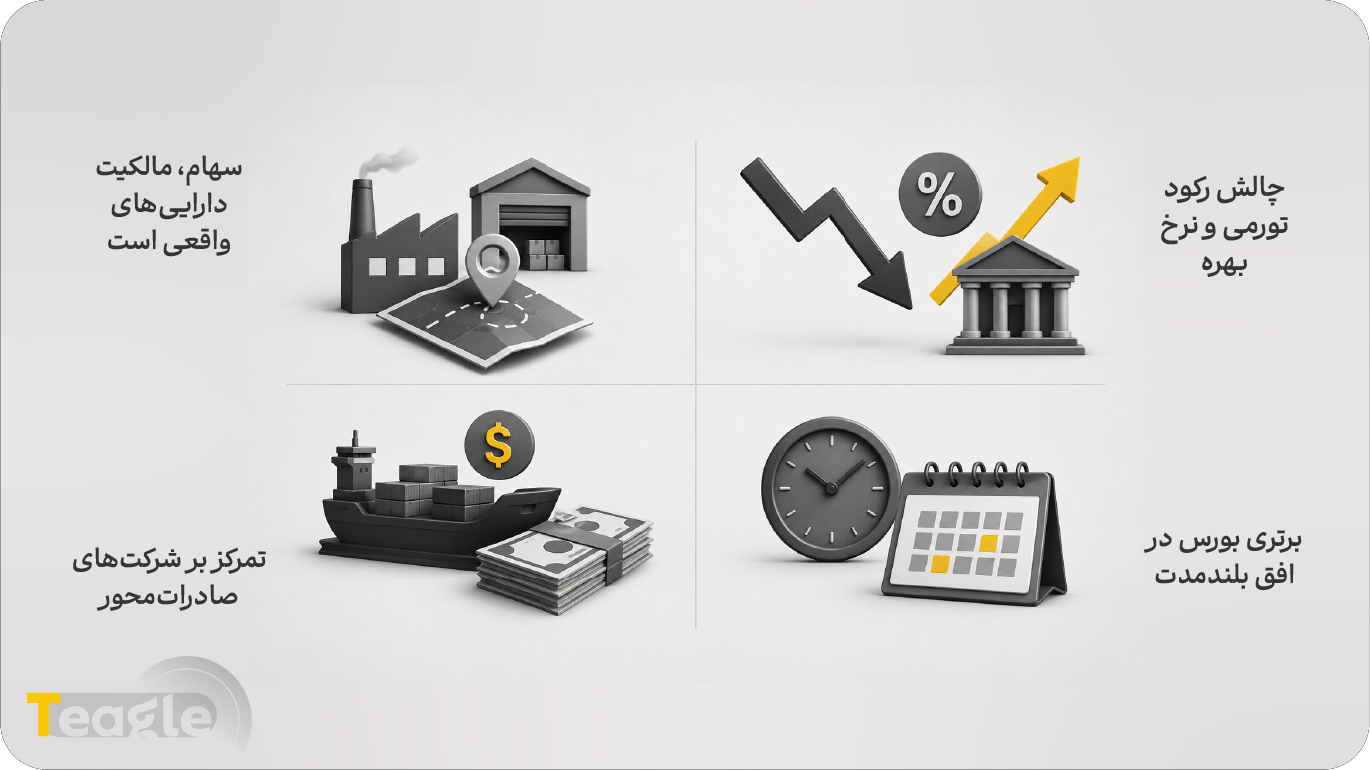
In Iran, the relationship between the stock exchange and inflation is somewhat more complex, because factors such as the exchange rate, sanctions and government economic decisions have a major impact on the stock market. In some periods, rising inflation and liquidity growth push investors toward the stock exchange to preserve the value of their money, but factors such as political issues, regulations and mandated pricing can prevent the market from growing in line with inflation. Meanwhile, exporting companies or those with dollar revenues, such as petrochemical and metals companies, usually perform better against inflation, because they are tied to dollar price cycles and the exchange rate.
-
In the long term, the stock exchange is a smart option for preserving purchasing power and earning real returns, but in the short term it is highly vulnerable to political risks, interest rate changes and macro policymaking, and it requires patience and an asset diversification strategy.
Inflation in the gold market
Gold is recognized as the most traditional, most liquid and most trusted store of value against inflation. Unlike money or some other assets, gold is not tied to any government or institution, which is why investors consider it a safe option for holding capital. Increased demand for gold in inflationary conditions usually drives its price up. For this reason, gold is often regarded as one of the most important investment safe havens during inflationary periods.
However, understanding gold's behavioral cycle requires knowing its two main drivers:
- Global driver (gold ounce): On an international scale, whenever the global economy faces the shadow of inflation, expansionary central bank policies (money printing) or geopolitical tensions, the global gold ounce moves upward. The historic record highs of the gold ounce in recent years are a clear example of this asset's response to global economic uncertainty.
- Domestic driver (exchange rate and expectations): In inflationary economies like Iran, gold delivers higher returns, because its price is the direct product of the «global ounce price» and the «domestic exchange rate». For this reason, gold quickly and without delay (unlike the housing market) prices in all inflation expectations and currency jumps in real time.
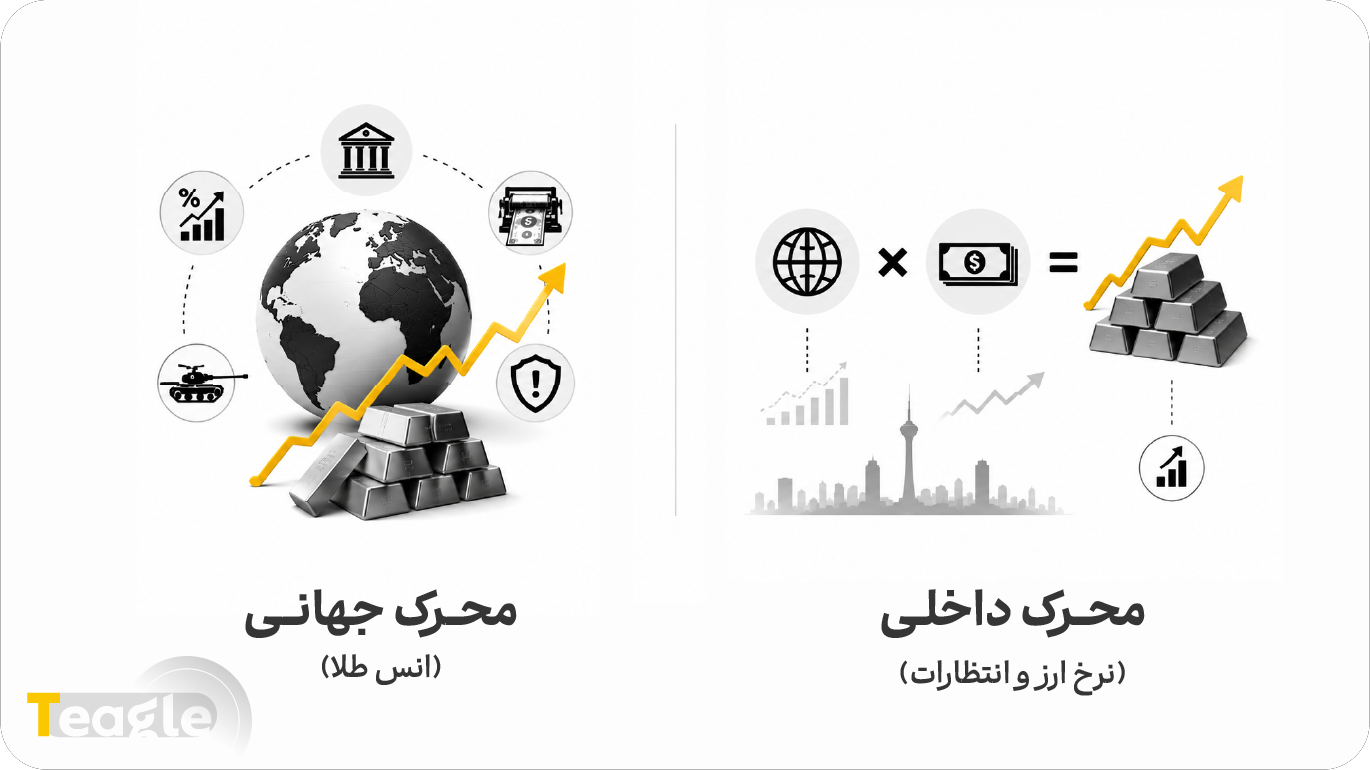
A review of economic cycles in Iran shows that during periods of intensified sanctions and inflationary surges, gold and coins, thanks to their very high liquidity, have been the first destination for idle capital. During political or military shocks, this market has shown the highest readiness to protect capital against the collapse of the national currency, with positive bubbles forming on coins.
Gold is the most efficient tool for locking in asset value and escaping inflation in both the short and long term. Despite pendulum-like, temporary fluctuations, thanks to its absolute liquidity, ease of entry and exit, and independence from production downturn cycles, this asset is considered the smartest anti-inflation shield for the general investor.
Inflation in the currency and forex market
In inflationary economies, the currency market is the fastest and most direct thermometer of society's negative expectations. In Iran's economic structure, the relationship between inflation and the exchange rate is mutual and self-reinforcing: liquidity growth and structural inflation quickly show up as a decline in the value of the national currency (rial), and on the other hand, a jump in the exchange rate makes imported goods more expensive and creates a new wave of inflation.
In this cycle, converting rials into strong currencies (such as dollar or euro banknotes) serves as an accessible defensive tool for traders and the general public to preserve purchasing power. However, from a macroeconomic perspective, investing in the currency market has the following characteristics:
- Gradual decline in the dollar's purchasing power: Investors should note that global fiat currencies (even the US dollar) have their own inherent annual inflation rate; so holding dollar banknotes idle for a long time, while insuring you against the fall of the rial, reduces the purchasing power of your assets by a few percent each year on a global scale.
- The international forex market; capitalizing on inflationary volatility: On the other side, the forex market is a dynamic trading environment where traders profit from differences in inflation rates and the tightening policies of the world's central banks (such as the Federal Reserve or the European Central Bank). During global inflation, volatility in major currency pairs (such as EUR/USD) rises sharply, and professional traders, relying on fundamental analysis, turn this economic threat into an opportunity to earn dollar returns.
- Systematic risks of the domestic market: The physical currency market inside the country is heavily influenced by political news, diplomatic developments and central bank interventions, a phenomenon that raises the risk of short-term volatility and emotional behavior in this market.
-
Buying currency in the domestic market is a temporary, quick refuge from the melting value of the rial during economic shocks; but for earning real, active returns, entering the international forex market and generating dollar income is a far smarter tool for beating domestic inflation.
Inflation in the cryptocurrency market
The cryptocurrency market (Cryptocurrencies), as the newest asset class in the world, has introduced a new layer of defensive tools against inflation. At the top of this market, Bitcoin (BTC), because of its coded structure and hard cap on mining (21 million units in total), is known in modern financial literature as «digital gold». The mechanism by which inflation affects this market is structurally very similar to gold, with the difference that digital assets have no physical borders and their transfer speed and liquidity are far higher. When global investors lose faith in the expansionary policies of central banks and the excessive printing of fiat money (such as the dollar and euro), part of their liquidity flows into major cryptocurrencies.
The behavioral cycle of cryptocurrencies in the face of structural inflation can be analyzed along three main lines:
- International hedging (risk coverage) tool: Assets like Bitcoin, due to their decentralized nature, are not controlled by any government or central bank; so government-sanctioned inflation cannot erode their intrinsic value, and in the long term they are a strong refuge against the declining purchasing power of global currencies.
- Appeal of stablecoins for the domestic market: For users in economies struggling with chronic inflation (such as Iran), cryptocurrencies go beyond Bitcoin's volatility. Fast, 24-hour access to stablecoins (fixed-price cryptocurrencies such as Tether $USDT$, which are pegged to 1 US dollar) provides the simplest and safest way to escape the falling value of the rial instantly and bypass the bureaucracy of the physical currency market.
- Risk of extreme volatility (Volatility): Despite its anti-inflation features, the cryptocurrency market has not yet fully matured and is heavily influenced by emotional behavior, changes in global interest rates and government regulation. This makes short-term volatility in this market extremely brutal.
-
Cryptocurrencies are a modern, extremely fast and efficient tool for cushioning domestic and international inflation. However, because of their extreme volatility, this market should not be seen as the only bastion for preserving capital; rather, adding a sensible weighting of major cryptocurrencies and stablecoins to your trading portfoliomaximizes the resilience of your asset basket against inflation.
Comparing the effect of inflation on traditional and modern financial markets
Now that you are familiar with the impact of economic inflation on each financial market, the table below gives you a brief analytical overview of these effects:
Market
Market type
Resistance to inflation
Systematic risk level
Suitable time horizon
Gold and coins
Traditional
Very high
Low
Short and long term
Housing and real estate
Traditional
High
Low to medium
Long term only
Currency (dollar banknotes)
Traditional
High (in Iran)
Medium
Short and medium term
Stock exchange and equities
Traditional
Medium to high
High
Medium and long term
Bonds and deposits
Traditional
Very low
Very low
Periods of stability and low inflation
Cryptocurrencies (Bitcoin/Tether)
Modern
Very high
Very high
Risk-tolerant, active individuals
The impact of inflation on investment decisions
Chronic, high inflation is the greatest enemy of rational processes in financial decision-making. In an inflationary environment, traders and investors face two draining challenges at once: protecting the value of their assets from melting away, and earning a real return (above the inflation rate). This two-sided pressure, together with systematic risks and environmental uncertainty, distorts market psychology and pushes investors toward short-term, emotional, survival-driven behavior.
The first and most damaging effect of inflation on a trader's mindset is the «shortening of the investment horizon». In this state, out of fear of the future and severe volatility, people prefer to liquidate their positions and assets as quickly as possible; yet from a macroeconomic perspective, beating structural inflation is only possible with a long-term view and patience in real-asset markets (such as gold or fundamentally sound stocks). This rush for quick returns steers people toward extremely high-risk, unbacked markets.
In this heated atmosphere, financial decisions usually fall into four common psychological traps:
- Fear of missing out (FOMO): The fear that goods or assets will become more expensive in the future leads to emotional, hasty, unanalyzed buying at price peaks.
- Herd behavior: Instead of analyzing economic indicators, investors simply follow media waves or the mass behavior of friends and acquaintances, and the result is nothing but the creation of, and entry into, price bubbles.
- The trap of overconfidence and miscalculation: People believe they can accurately predict every fluctuation; as a result, they enter the market at price peaks and, during sharp drops, exit at false bottoms with heavy losses.
- Impatience and reverse FOMO: Due to an urgent need for liquidity or fear of further declines, investors sell their winning positions far too early, before the main growth phase and before beating the inflation rate.
-
Rather than changing the market's mathematical formulas, inflation manipulates traders' psychology. Success in this environment depends above all on personal discipline, sticking to a risk management strategy, and the ability to control emotions during price surges.
How can we make better investment decisions despite inflation in Iran?
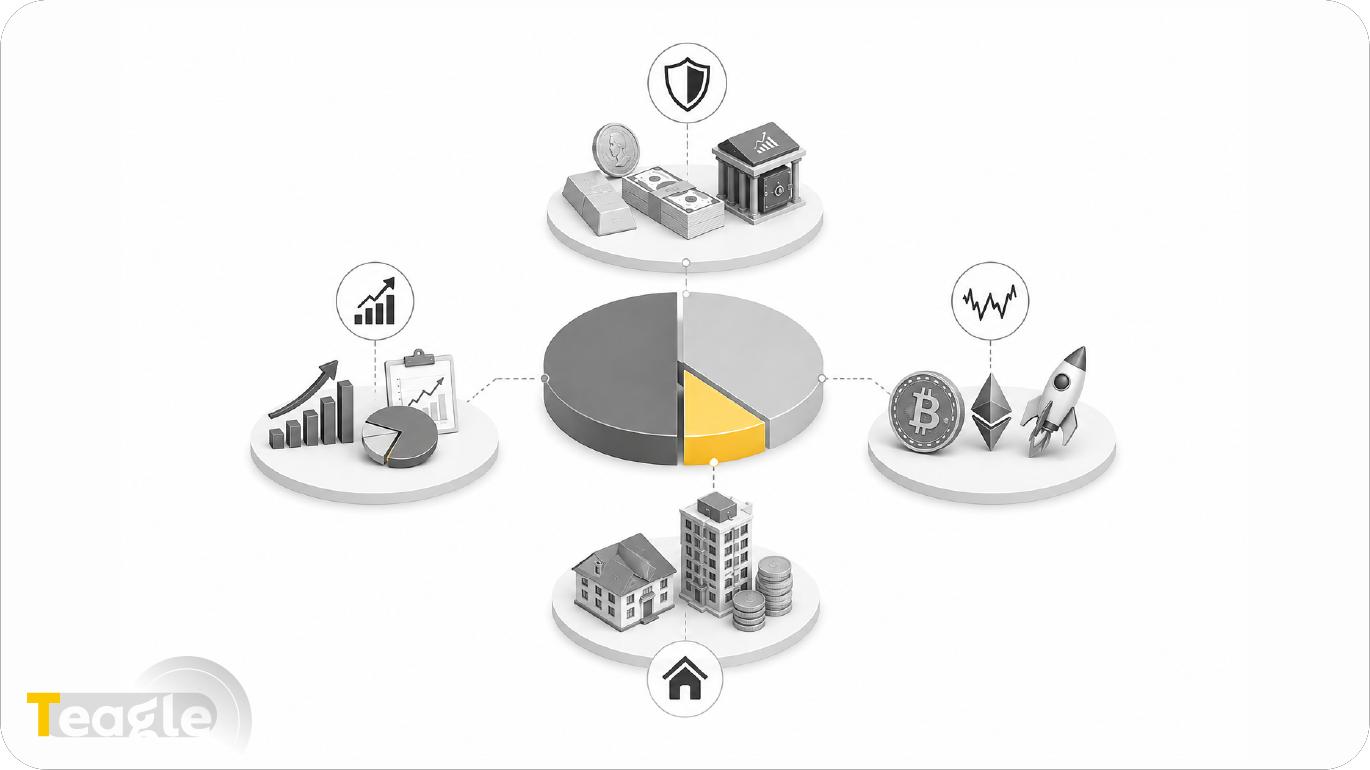
In Iran's economic reality and inflationary environment, smart decision-making requires adherence to three key principles: diversifying your asset basket (portfolio), taking a long-term view, and managing risk carefully. In this environment, although focusing on assets that can preserve their intrinsic value and weather inflationary waves is challenging, it is of vital importance. Adopting this approach, together with smart allocation of capital based on your budget and intended time horizon, can largely protect your assets against sudden political and economic shocks. Ultimately, the most sound strategy is to rely on structural analysis and distribute your assets, in proportion to your budget, across promising financial markets.
To make this strategy more tangible, in the table below we have designed three sample optimized investment portfolios for three different capital ranges (small, medium and large). These models are arranged based on asset optimization patterns in Iran's economy to strike a balance between «quick liquidity», «long-term growth» and «exceptional inflation hedging». The overall goal of these portfolios is to preserve the absolute value of assets against inflation in the 40 percent range and to aim for nominal returns of 30 to 60 percent per year.
|
Capital size |
Inflation shield and value protection (60% to 70% of the portfolio) |
Long-term growth driver (20% to 30% of the portfolio) |
Risk-tolerant, volatile layer (up to 10% of the portfolio) |
|
Small capital (up to 500 million Toman) |
Quarter coins, used gold, exchange-traded gold funds and physical foreign currency |
Fundamentally sound stocks, equity investment funds |
Major cryptocurrencies (Bitcoin/Ethereum) in limited amounts |
|
Medium capital (500 million to 5 billion Toman) |
Melted gold, full coins, exchange-traded real estate funds |
Commodity-based (export) stocks and index funds |
High-volume cars, cryptocurrencies and volatile assets |
|
Large capital (over 5 billion Toman) |
Physical purchase of property (land, apartments) or heavy gold coins |
Diversified stock portfolio and large exchange-traded funds |
Small commercial properties, digital currencies and startups |
This diversified portfolio allocation beats structural inflation, spreads systematic risks across different markets and reduces sudden portfolio swings by up to 50 percent. However, the condition for this strategy to survive is periodic review and rebalancing every 6 months, so that asset weights are adjusted in line with changes in the inflation rate and the dollar.
If you are looking for a simple, fast and hassle-free way to implement this strategy, exchange-traded funds (ETFs) are the best option. These funds have three vital features for getting through inflationary crises:
- High, daily liquidity: Unlike the physical housing or gold market, they turn into cash within seconds.
- Professional, specialized management: Assets are managed by market analysts, so there is no need for your own constant analysis.
- Lower trading costs: Their buying and selling fees are much lower than in the traditional market (such as gold shops or real estate agencies), and they carry no risk of fraud, theft or false physical bubbles.
-
To implement your anti-inflation portfolio, you can use three key categories of funds:
1. Gold-based funds: For the «capital value protection» layer (such as the Ayar, Tala, Gohar or Zar funds), whose returns move fully in step with gold coins and the global ounce price.
2. Equity and index funds: For the «long-term growth» layer, giving you a selection of the market's fundamentally sound and export-oriented stocks.
3. Real estate funds (REITs): For entering the housing market with small amounts. These funds let you share in the ownership of large construction projects according to your budget, without having to buy an entire property, so you don't fall behind the per-square-meter growth of housing prices.
Here, the role of official capital market brokerages and modern trading platforms in facilitating, speeding up and reducing the bureaucracy of these anti-inflation investments is undeniable. They provide the infrastructure a trader or investor needs to move their rials into safe and diverse financial havens in just a few minutes.
Common mistakes traders make during economic inflation
In Iran, traders under inflationary pressure often fall prey to emotions and haste, which leads to loss of capital; recognizing these mistakes is the first step to avoiding them. Common mistakes investors make in inflationary conditions include:
1. Investing 100% in a single asset: putting all your money in gold or crypto without diversification increases the risk of a crash.
2. Short-term view (under 1 year): selling on temporary fluctuations instead of waiting for long-term growth.
3. Following media trends: buying based on Telegram news or rumors without analysis.
4. Ignoring liquidity: investing in housing/land without an emergency fund.
5. Using leverage/borrowing: taking loans to buy coins or stocks during high inflation, which multiplies losses.
6. Ignoring hidden costs: agency fees, sales tax or car depreciation.
7. Not adjusting for inflation: holding cash or bank deposits that yield below the inflation rate.
Frequently asked questions about the effect of inflation on financial markets
What indicators are used to assess the effect of inflation on the currency market?
The key indicators for measuring the impact of inflation on the currency market are: the Consumer Price Index (CPI), the point-to-point inflation rate, the annual inflation rate and the free-market exchange rate. CPI is the main indicator, showing the percentage change in the price of the basket of household consumer goods and services, and it directly affects currency demand for imports and inflation expectations; as this index keeps rising, the nominal value of the rial falls and demand for safe currencies goes up. Point-to-point inflation (comparing the current month with the same month last year) and annual inflation (the 12-month average) forecast the weakening of the national currency's purchasing power and lead to a rush of capital into the currency market. To track these statistics, you can check the Statistical Centre of Iran website (amar.org.ir) and reliable currency price sources (such as tgju.org).
Why is investing in bonds during inflation a mistake?
Investing in bonds and fixed-income assets during periods of high inflation is a mistake, because the nominal interest rate on these bonds is usually much lower than the actual inflation rate in society, and as a result the «real interest rate» turns negative. Under these conditions, the purchasing power of the principal and the returns it generates melts away over time; for example, if the inflation rate is 45% and the bond's nominal yield is 30%, the investor suffers a real loss (a decline in purchasing power) of 15% per year. In addition, as inflation intensifies and the likelihood of the central bank raising interest rates increases, the price of older bonds in the debt market falls and their value decreases. In contrast, inflation-hedging assets such as gold or commodity-based stocks have much more flexibility to move in line with inflation.
Are cryptocurrencies resistant to inflation?
Cryptocurrencies such as Bitcoin are conditionally resistant to inflation, because their limited supply (such as Bitcoin's cap of 21 million units) has made them comparable to “digital gold” in modern financial literature. However, extreme price volatility and regulatory risks make them high-risk assets. The relative resilience of cryptocurrencies stems from their decentralized nature and their independence from government monetary policy, but this never amounts to a definitive guarantee, since during global contractionary cycles this market also suffers heavy crashes. In Iran's inflationary economy, cryptocurrencies are never a complete substitute for gold and are considered volatile assets, so a maximum allocation of 10 percent of the portfolio is appropriate for them. Also, for the safety of your assets, using hardware (cold) wallets is essential.
Related Articles
Contents of this article


Related articles



User reviews

Newest
 Upload image