
What Is Cold Storage or a Cold Wallet in Crypto?

Author
Admin
Published
 2026/06/10
Updated
2026/10/25
Reading time
5 دقیقه


You may have heard the famous saying: «Not your keys, not your coins.» Many people assume that once they buy cryptocurrency, they truly own their assets, but the truth is that ownership on the blockchain only means something when you control the private keys yourself.
The history of the crypto market is full of stories of investors who held millions of dollars in assets but effectively lost control of their capital because an exchange was hacked, an account was frozen, or they simply forgot their access details.
This is where the concept of cold storage (Cold Storage) becomes important. It is a method that aims to separate private keys from the internet and keep them away from online threats. In fact, a cold wallet is not just a storage tool; it is a powerful security layer for protecting assets you may have spent years and large sums of money to acquire.
But how exactly does cold storage work? Can any cold wallet guarantee your security? How does it differ from hot wallets, and when should you consider using one? Below, we cover everything you need to know about cold wallets.
What Is a Cold Wallet and How Does It Work?
A cold wallet (Cold Wallet), or offline wallet (Offline Wallet), is one of the safest ways to hold cryptocurrency. It stores private keys (Private Keys) in a completely offline environment, out of reach of the internet. Since the private key is effectively the proof of ownership and control of your digital assets, protecting it is extremely important. Anyone who gains access to this key can also control the assets linked to it.
Unlike hot wallets (Hot Wallet), which are constantly connected to the internet, cold wallets are used only at specific times and through controlled processes to sign transactions. This is why large investors, companies in the blockchain space and people who intend to hold crypto long term use cold storage systems to protect a significant portion of their assets.
Cold Storage in Simple Terms
To understand this concept better, think of your cryptocurrency as the balance of a bank account. Here, the private key acts as the password to that account. Anyone who has this password can manage or transfer the assets. So what really needs protecting is not the cryptocurrency itself, but the private key.
An important point many newcomers don't know is that cryptocurrencies are not stored in the wallet itself; what the wallet holds are the private keys that give access to and control over the assets recorded on the blockchain. So cold wallet security really means protecting the most important part of your digital assets: the private key.
How Are Transactions Signed with a Cold Wallet?
A common question is: if a cold wallet isn't connected to the internet, how does it send transactions? The answer lies in the process of «offline signing».
The steps of a transaction with a cold wallet usually look like this:
- The user first creates the transaction on an internet-connected device.
- The transaction data is transferred to the cold wallet; this can be done via QR code (QR Code), USB (USB) or NFC.
- Without connecting to the internet, the cold wallet signs the transaction using the private key.
- The signed transaction is returned to the online device and broadcast to the blockchain network.
Throughout these steps, the private key never leaves the device's secure environment and never connects directly to the internet. As a result, the chance of the key being stolen by malware, hackers or online attacks is minimized.
The importance of this becomes clearer when we look at major events in the crypto market. After the collapse and crisis of the FTX exchange ( FTX), many investors decided to withdraw their assets from exchanges and move them to cold wallets. This once again showed that keeping private keys in an offline environment is one of the most reliable ways of protecting capital in the cryptocurrency market .
What Is the Difference Between Cold and Hot Wallets?
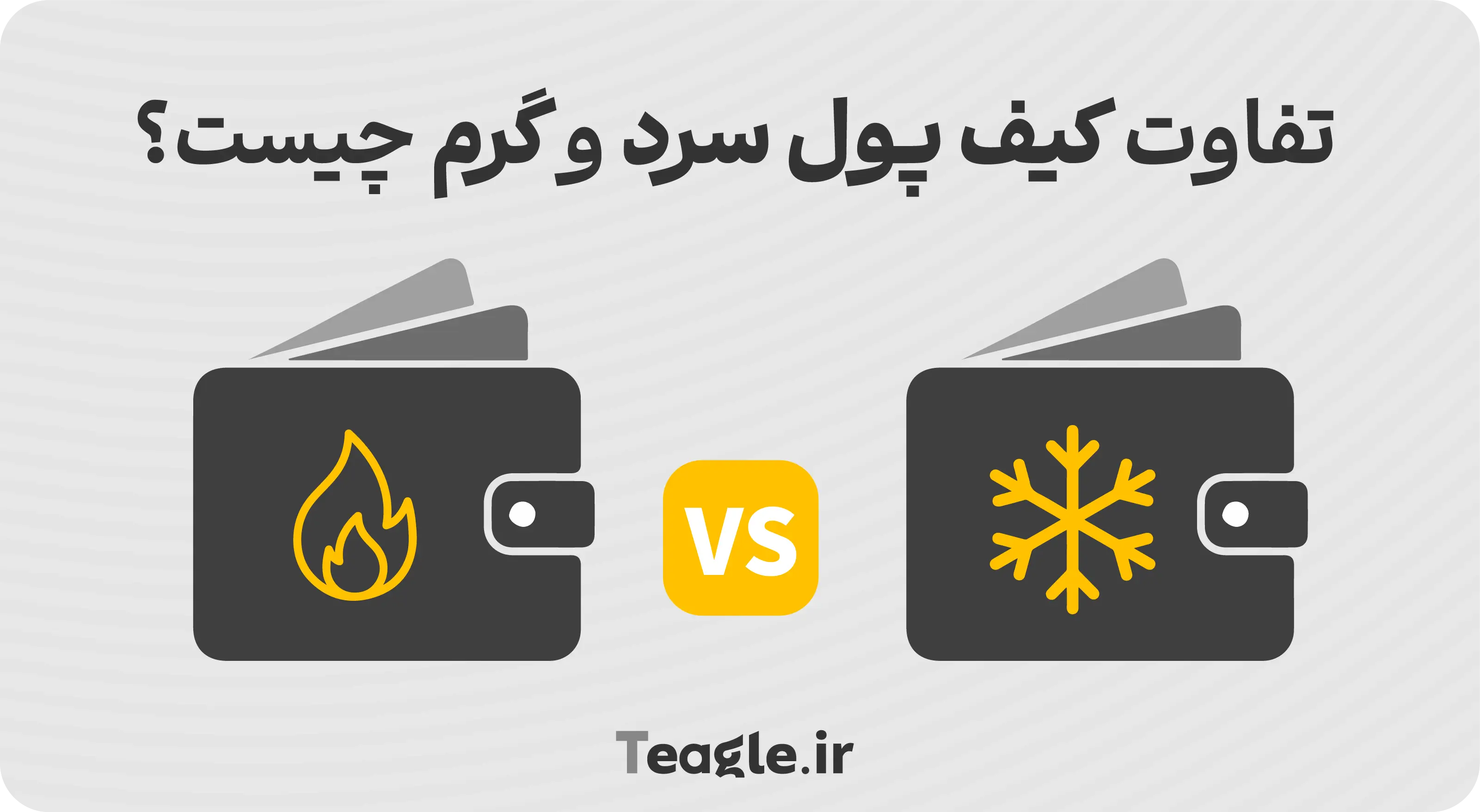
When it comes to holding cryptocurrency, almost all wallets fall into one of two main categories: cold wallets and hot wallets . The difference between the two may look simple, but it can directly affect the security of your capital.
The most important difference between cold and hot wallets is how they connect to the internet . Hot wallets are connected to the internet constantly or most of the time, which is why they offer faster access and a simpler user experience. Cold wallets, on the other hand, keep private keys in an offline environment, which makes them a much safer option for storing assets.
Simply put, if your goal is day trading, frequent buying and selling, or interacting with decentralized applications (DApps), a hot wallet is the more practical choice. But if you plan to hold your Bitcoin, Ethereum or other cryptocurrencies for months or years, a cold wallet gives you far more security.
|
Feature |
Cold wallet |
Hot wallet |
|
Internet connection |
None or very limited |
Always connected |
|
Security level |
Very high |
Medium |
|
Ease of use |
Lower |
Higher |
|
Suitable for |
Long-term holding |
Day trading |
|
Hacking and malware risk |
Very low |
Relatively high |
|
Speed of access to assets |
Medium |
Fast |
Of course, this doesn't mean one is absolutely better than the other, since each is designed for a specific purpose. A hot wallet prioritizes speed and easy access, while a cold wallet focuses on maximum protection of assets.
To put it another way, a hot wallet is like the wallet you carry in your pocket every day: getting to the money inside is quick and easy, but if it is stolen or lost, you risk losing what's in it. A cold wallet, by contrast, is like a safe kept at home or in a bank: accessing it takes a bit more time, but it is far more secure.
That is why many professional investors use a hybrid strategy. They keep a small portion of their assets in a hot wallet for trading and everyday use and move the bulk of their capital to a cold wallet. This approach strikes a good balance between security and accessibility.
Types of cold wallets
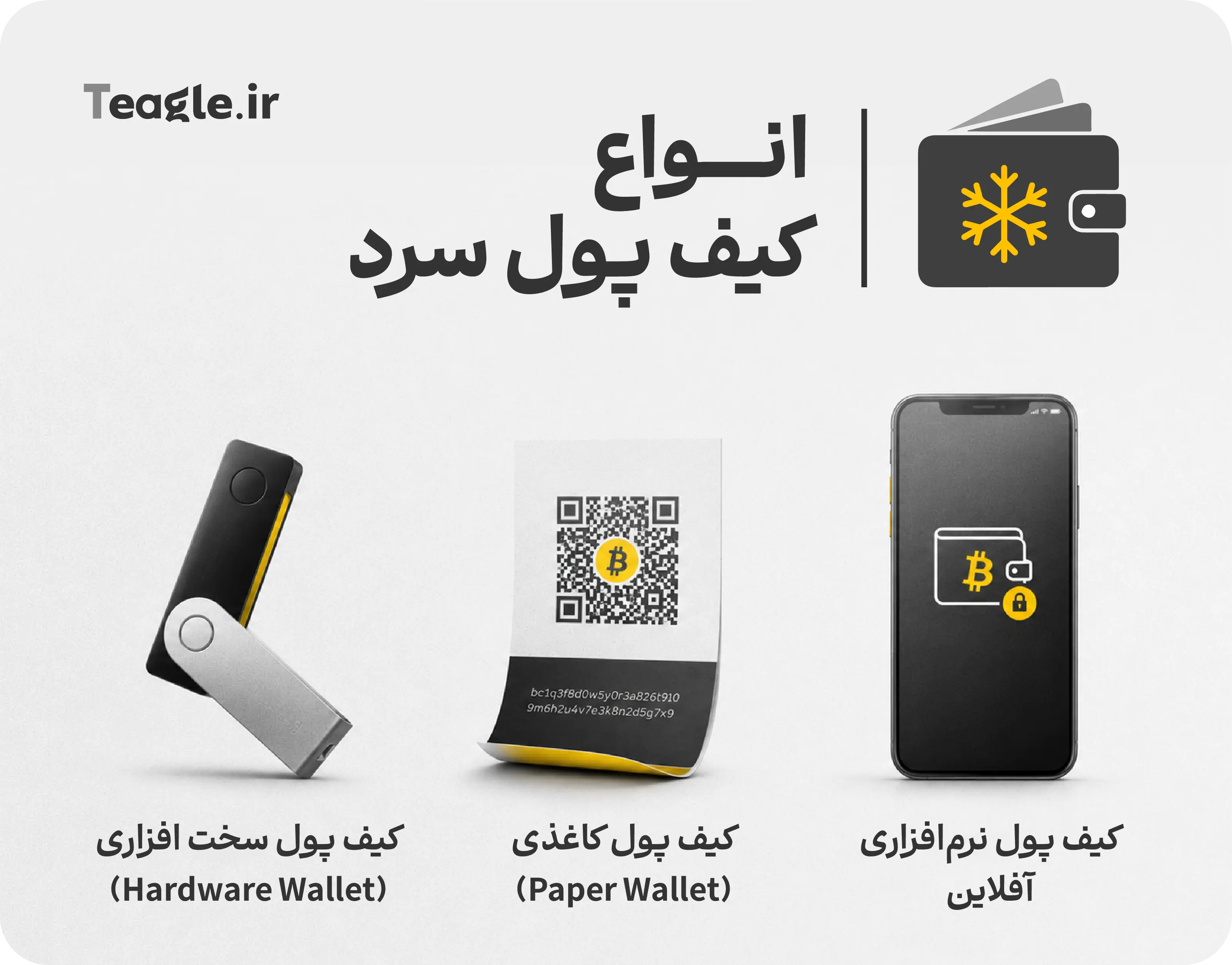
When cold wallets come up, many people think only of hardware wallets. However, cold storage includes several different methods of keeping private keys offline. Each of these methods has its own advantages, limitations and level of security.
Hardware Wallet (Hardware Wallet)
A hardware wallet is the most popular and widely used type of cold wallet. These physical devices, which usually look like a USB flash drive, store private keys on a dedicated secure chip and do not allow this sensitive information to leave the device.
When a transaction is made, the signing takes place inside the device itself and the private key is never exposed to the internet. This is why hardware wallets have become the gold standard of cold storage.
Some of the best-known examples in this category are:
- Ledger Nano S Plus
- Ledger Flex
- Trezor Safe 7
- Ledger Stax
- Tangem
- OneKey
If you're looking for a combination of security, ease of use and reliability, a hardware wallet is usually the best choice.
Paper Wallet (Paper Wallet)
A paper wallet is one of the oldest cold storage methods. In this method, the public key and private key are printed or written on a sheet of paper, and a QR Code is usually provided as well for easier access. Although this method is highly secure in theory, its vulnerability to physical factors has made it less popular than it used to be.
The main risks of a paper wallet are:
- Losing the sheet
- Damage from water or moisture
- Fire
- Wear or fading of the printed information
For this reason, paper wallets today are mostly used for educational or special purposes and are rarely recommended to regular users.
Offline software wallet
Another type of cold storage is using a software wallet on a fully offline or Air-Gapped device. In this method, the user disconnects a dedicated computer or laptop from the internet and installs the wallet software on it.
All operations related to storing and signing transactions are carried out on that offline device, and only the necessary data is transferred between the online and offline devices.
This method can provide very high security, but it requires more technical knowledge and is usually used by professional users, organizations or people holding significant funds.
An example of this method is using the Electrum wallet in offline or Air-Gapped mode, which some professional Bitcoin users have relied on for years.
Pros and cons of a cold wallet
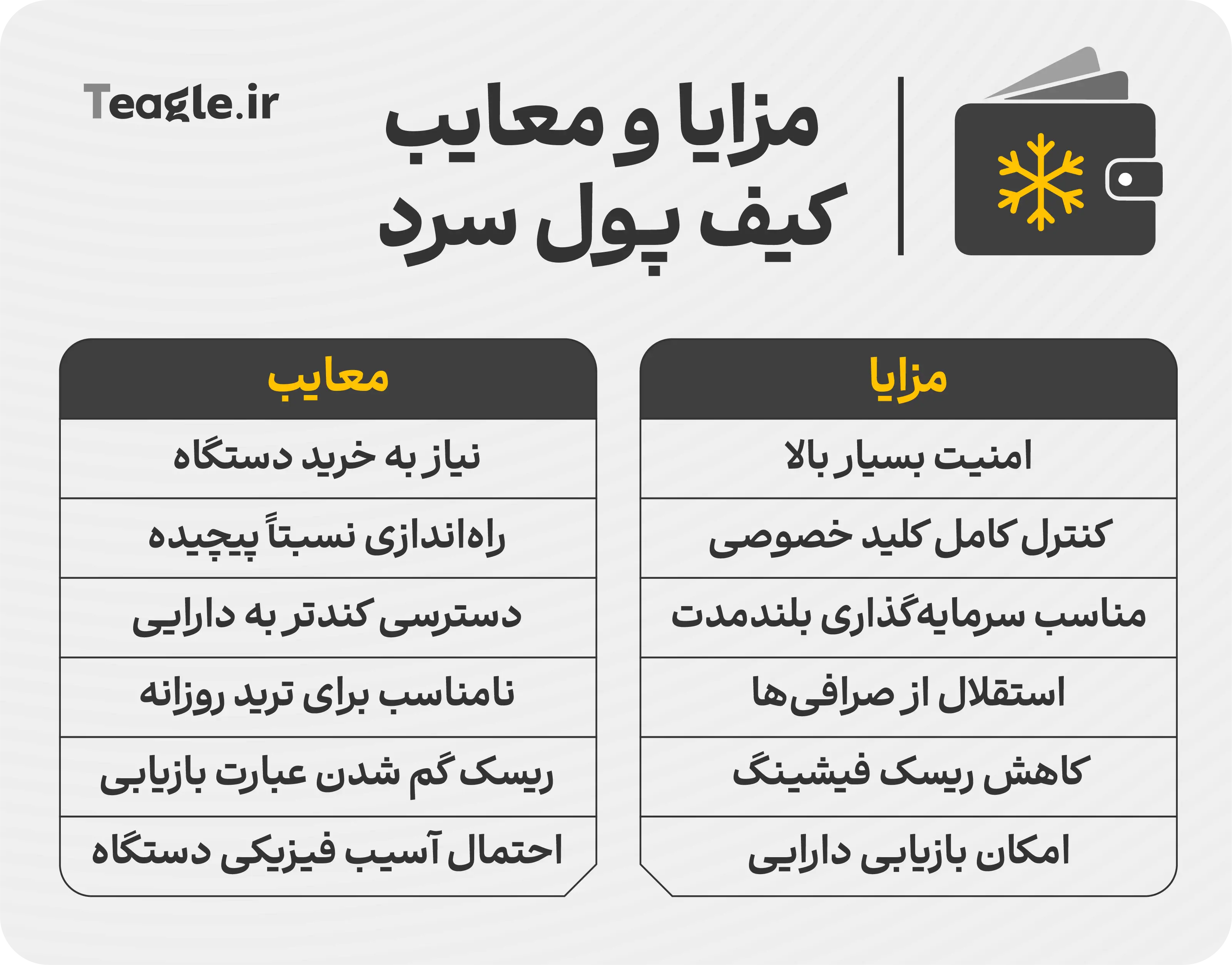
So far, we have seen that a cold wallet is the safest way to store cryptocurrencies. However, no security solution is completely flawless. Just as cold storage offers significant advantages in protecting assets, it also has limitations and challenges you should be aware of before buying.
The main reason cold wallets are popular is their exceptional level of security. Since private keys are kept in an offline environment, hackers, malware, phishing attacks and other online threats practically have no way to directly access your assets.
That is why many investment funds, blockchain companies and large Bitcoin holders use cold storage to protect their capital.
Other advantages of this type of digital wallet include:
· Suitable for long-term investment
· Full control over your assets
· Protection against exchange risk
· Ability to recover assets with a recovery phrase
Despite its many advantages, using a cold wallet is not without drawbacks and may not be the ideal option for every user. The main disadvantages of this method include:
· Less accessibility and convenience
· Upfront purchase cost
· Full responsibility for safekeeping lies with the user.
· Risk of physical damage
· An initial learning curve
It is worth noting that despite these weaknesses, many professional investors believe the security benefits of a cold wallet, especially for medium- and long-term holdings, far outweigh its limitations. In fact, the small cost and time spent on cold storage can protect capital whose value may multiply in the future.
The best cold (hardware) wallets in 2026
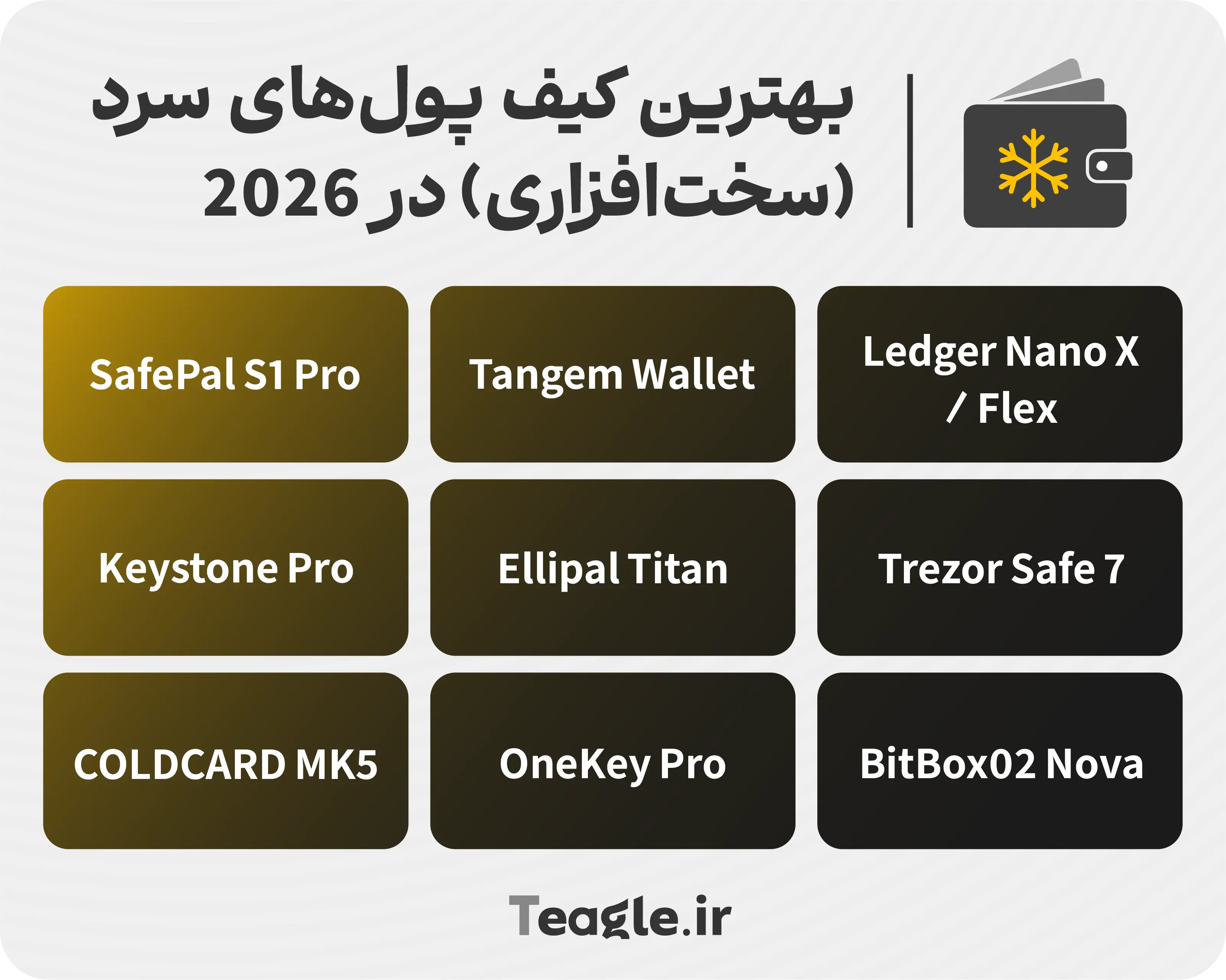
If you have decided to use cold storage, you will probably face an important question: Which is the best crypto cold wallet?
The answer depends on your needs. Some users want maximum security, some prioritize ease of use, and others look for an affordable option with broad cryptocurrency support. Fortunately, the hardware wallet market has matured considerably and offers a wide range of options for all kinds of users.
The table below compares the most popular and reputable cold wallets based on criteria such as security, user experience, cryptocurrency support, technical features and value for money.
|
Wallet |
Best for |
Standout feature |
|
Ledger Nano X / Flex |
Beginner to professional users |
Bluetooth, powerful Ledger Live app |
|
Trezor Safe 7 |
Privacy-focused users |
Touchscreen, focus on transparency and security |
|
BitBox02 Nova |
Professional users |
Affordable price and easy access |
|
Tangem Wallet |
New users |
NFC-based smart card |
|
Ellipal Titan |
Maximum security |
Fully Air-Gapped and QR Code-based |
|
OneKey Pro |
DeFi and Web3 users |
Modern design and broad support |
|
SafePal S1 Pro |
Limited budget |
Good security at an affordable price |
|
Keystone Pro |
Professional holders |
Offline signing and advanced security |
|
COLDCARD MK5 |
Professional holders |
Highly advanced security settings |
Which cold wallet is better suited to Iranian users?
For Iranian users, beyond security and features, factors such as availability, price, support and ease of purchase also matter. On that basis, options such as OneKey, Tangem, SafePal S1 or Trezor Safe 5 can be named as popular choices among Iranians.
The key point is that regardless of the brand you choose, always buy a hardware wallet from reputable sellers and avoid buying second-hand or opened devices. The security of a crypto cold wallet starts the moment you buy it, and the slightest tampering with the device can put your assets at risk.
How to buy or make a cold wallet?
Choosing between buying or making a cold wallet depends on the size of your capital and your technical knowledge. However, for most users, buying a reputable hardware wallet is the safest and simplest option.
When buying a crypto cold wallet, follow these tips:
- Buy only from reputable sellers.
- Make sure the device's seal and packaging are intact.
- Never buy a second-hand wallet.
- Generate the recovery phrase (Seed Phrase) yourself.
- Store the recovery phrase offline and in a safe place.
Iranian users should also use reputable domestic sellers or trusted intermediaries to obtain their wallet.
Another important point is that professional users can also create a cold wallet without buying a dedicated device. In this method, private keys must be generated and stored in a completely offline environment. The most common methods include creating a paper wallet (Paper Wallet) or using a laptop Air-Gapped to install wallets such as Electrum.
However, since making a cold wallet manually requires technical knowledge and strict adherence to security practices, buying a reputable hardware wallet remains the safest and lowest-risk choice for most users.
Is a cold wallet worth buying?
In a market where the security of assets matters as much as their profitability, buying a cold wallet can be one of the smartest decisions any investor makes. By keeping private keys away from the internet, cold storage minimizes the risk of hacks, phishing and potential exchange problems, and gives you full control over your assets. If you plan to hold cryptocurrencies long term, a reputable cold wallet can protect your capital more securely.
Before choosing, review your needs and the size of your holdings, and pick a wallet that suits your situation. Security in the crypto market is not optional; it is part of every investor's responsibility.
FAQ about cold wallets and cold storage
Who is a cold wallet suitable for?
For those who have significant capital and plan to hold it long term.
2. Is a cold wallet 100% secure?
This category of digital wallets offers very high security, but you should always watch out for physical risks and human error.
Is it possible to recover a cold wallet after it breaks?
Yes. If you have your recovery phrase (Seed Phrase), you can restore your assets on a new wallet or even on another compatible wallet.
Is a spot wallet cold or hot?
Assets held in exchanges' spot accounts fall into the category of hot wallets.
Are Trust Wallet and Tonkeeper cold or hot?
Trust Wallet and Tonkeeper are both considered hot wallets, because they are installed on a mobile phone or an internet-connected device and manage private keys in an online environment.
Related Articles
Contents of this article


Related articles


User reviews

Newest
 Upload image