10 Common Mistakes Iranians Make When Buying Tether

Author
Admin
Published
 2026/06/21
Updated
2026/09/15
Reading time
5 دقیقه


Most of us have experienced this familiar feeling to some degree: the moment prices suddenly jump and, without having made any wrong decision, we effectively face a drop in our purchasing power. This bitter, recurring reality has been part of life for us Iranians for years, and this shared experience has turned Tether from an ordinary cryptocurrency into an emergency tool for preserving the value of our assets.
Yet this very vital role has made the process of buying Tether a sensitive stage; one where any wrong decision can carry significant financial consequences.
The truth is that a large share of Iranian users' losses happens not in market analysis or price swings, but in the process of buying Tether (USDT) itself; where a wrong network choice, a hasty withdrawal, trusting an unreliable exchange, or even misunderstanding the concept of fees can wipe out capital within seconds. In such conditions, knowing the common mistakes and understanding how to buy Tether safely is the only real way to break the recurring cycle of losses; a cycle that traps new users every day and can be stopped completely with a few informed decisions.
The path to buying Tether safely
- Step 1: Choose a reputable exchange
- Step 2: Choose the transfer network
- Step 3: Check the fees
- Step 4: Test transfer
- Step 5: Store securely
(Designed as a flowchart with step arrows and security, wallet and network icons)
Mistake one: Buying Tether without paying attention to the transfer network
Ignoring the transfer network is one of the most serious mistakes made when buying or moving Tether. Tether is issued on different blockchains with different standards such as TRC20, ERC20 and BEP20 , and each network has its own technical structure, processing speed and fee model. These differences mean that choosing the wrong network not only creates extra costs but, in some cases, can lead to permanent loss of assets .
Sending Tether over a network that is incompatible with the destination address—for example, transferring USDT on the Tron network to an ERC20 address—means that the destination blockchain cannot recognize the transaction. In such a case, the asset goes down a path from which it cannot be recovered and effectively becomes inaccessible. This technical mismatch shows that matching the source and destination networks and understanding the differences between standards is the first and most important step toward a safe, risk-free transfer.
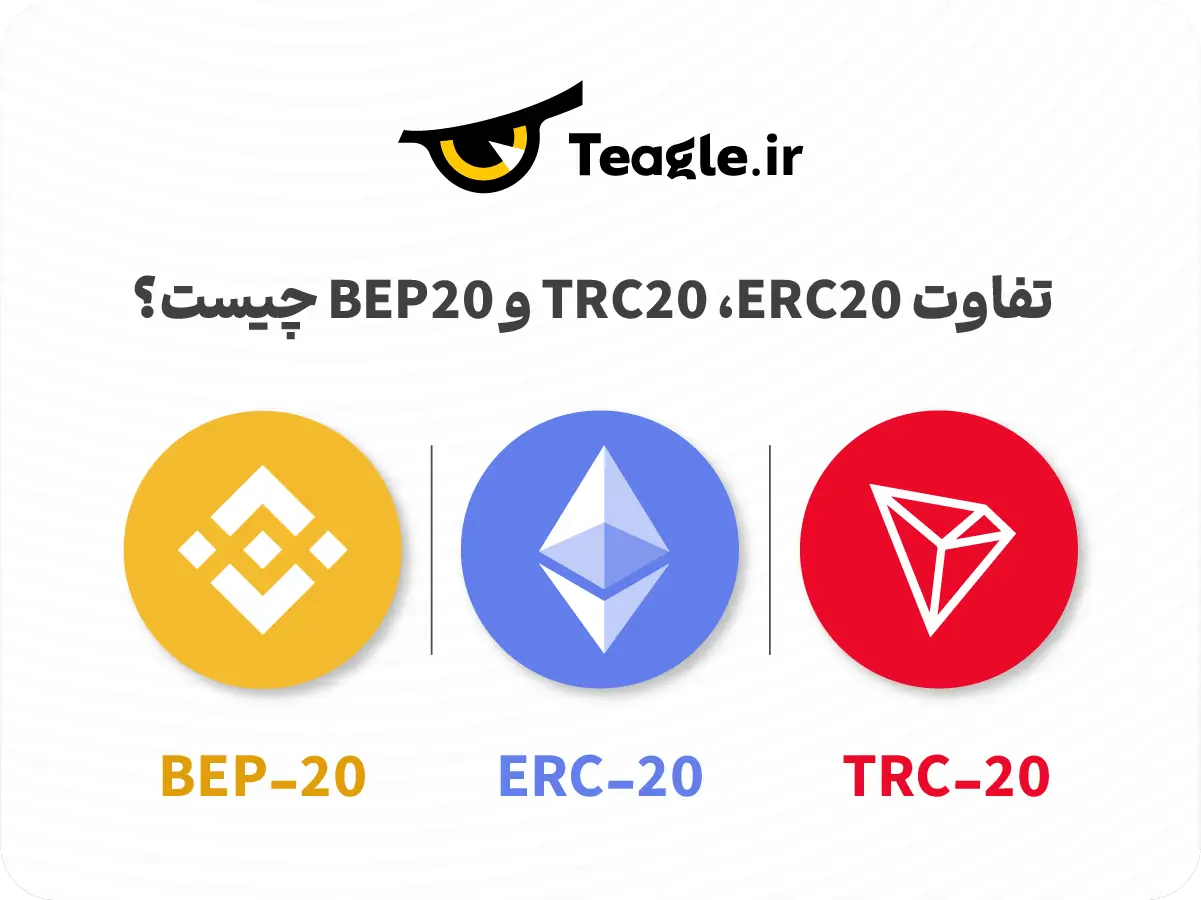
What is the difference between TRC20, ERC20 and BEP20?
Each network Tether is issued on runs on a different blockchain infrastructure; infrastructures that differ in processing speed, fee model, security and compatibility with exchanges and wallets. That is why, before choosing the right network to transfer or hold USDT, you need to understand the technical and operational differences between the networks so you can pick the one that best matches your needs, costs and transfer destination. The table below summarizes and compares these differences.
|
Network |
Fee |
Transfer speed |
Security level |
Common use |
|
Tron (TRC20 standard) |
Very low |
Fast (a few seconds) |
Medium |
Popular in Iran |
|
Ethereum (ERC20 standard) |
High |
Medium (1-15 minutes) |
Very high |
Secure and global |
|
BNB Chain (BEP20 standard) |
Very low |
Fast (about 30 seconds) |
Medium |
Suited to DeFi |
Mistake two: Buying Tether from unreliable sources and exchanges
Buying Tether from platforms that lack a license, have weak security infrastructure or an unclear identity is one of the most serious risks and can directly lead to losing your assets. Online, many trading websites and channels operate without any oversight, security standards or clear accountability; so even the smallest misplaced trust can have heavy financial consequences.
How do you check an exchange's credibility?
Before any deposit or trade, you need to make sure you are dealing with a trustworthy exchange, because a significant share of online platforms operate without a license, without security infrastructure and without a transparent legal identity. To avoid serious risks, carefully check the warning signs and verification criteria to tell whether an exchange is genuinely secure or merely looks professional.
The main signs of a suspicious platform are:
- Promises of unrealistic rates or guaranteed profits
- No track record, legal identity or valid contact information
- Pressure to trade quickly without a secure system
- No mandatory identity verification or transparent security policies
- Poor support, bot-like replies or a website with a newly registered domain
In addition, several key criteria should be considered together when checking an exchange's credibility; including reviewing genuine user opinions on forums and social networks (not promotional comments), assessing its track record and trading volume along with security reports, and paying attention to the transparency of its fee structure and the presence of security infrastructure such as cold storage and multi-factor authentication. Ultimately, choosing platforms with a long history, an identifiable team and traceable support can significantly reduce your risk.
Mistake three: Trusting payment receipts and screenshots in P2P trades
In peer-to-peer trades, one of the most common mistakes is trusting a payment receipt or screenshot; images that look legitimate but have no connection to the real banking system and can easily be edited. Relying on them can therefore expose your capital to serious risk.
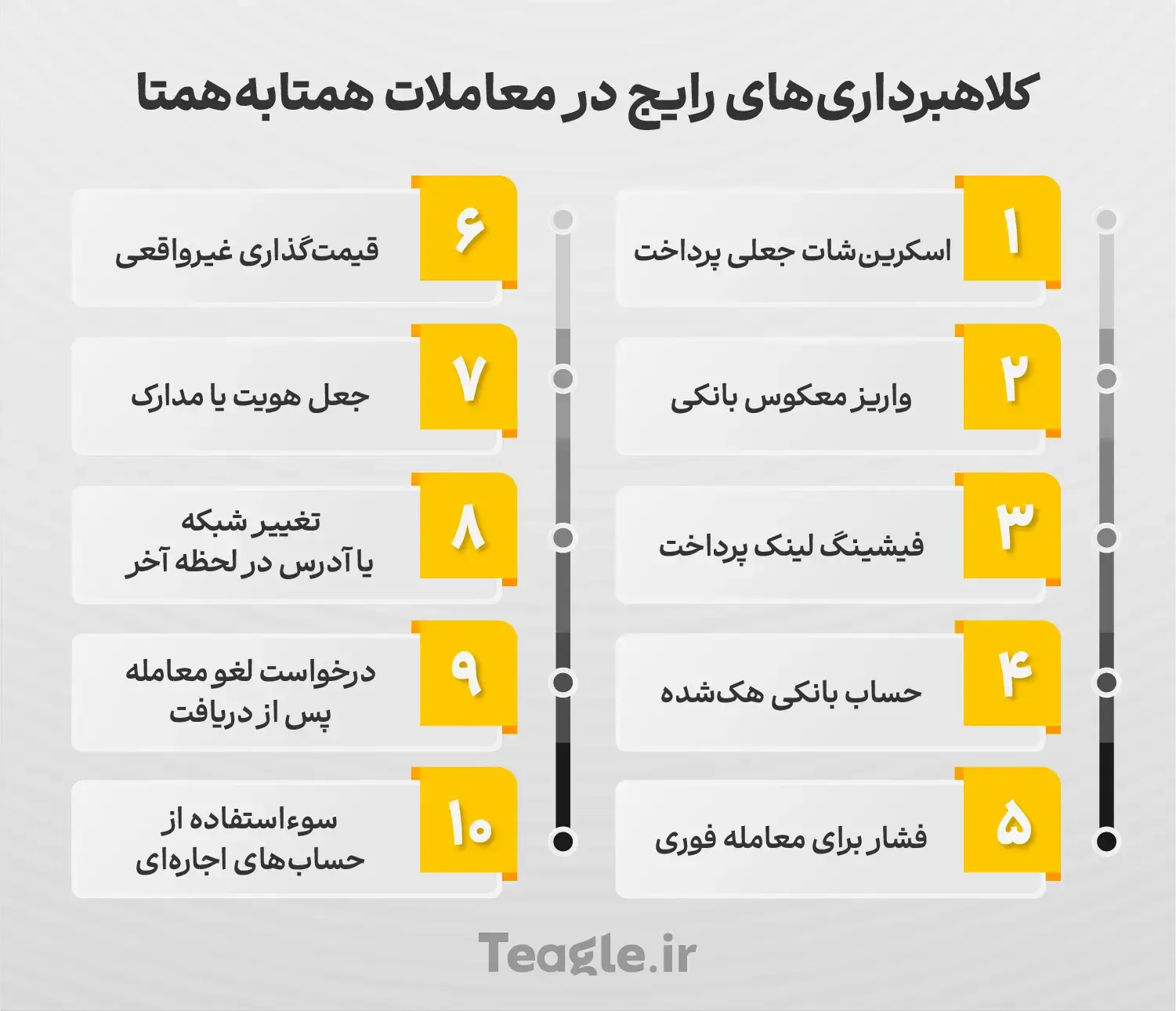
Common scams in peer-to-peer trades
Fake payment screenshot
Bank payment reversal
Payment link phishing
Hacked bank account
Pressure for an immediate trade
Unrealistic pricing
Forged identity or documents
Last-minute change of network or address
Request to cancel the trade after receipt
Abuse of rented accounts
Keep in mind that the only way to confirm a payment is to check the actual deposit in your bank account or official payment gateway. Many P2P scams start exactly here: a fake screenshot and a very real loss.
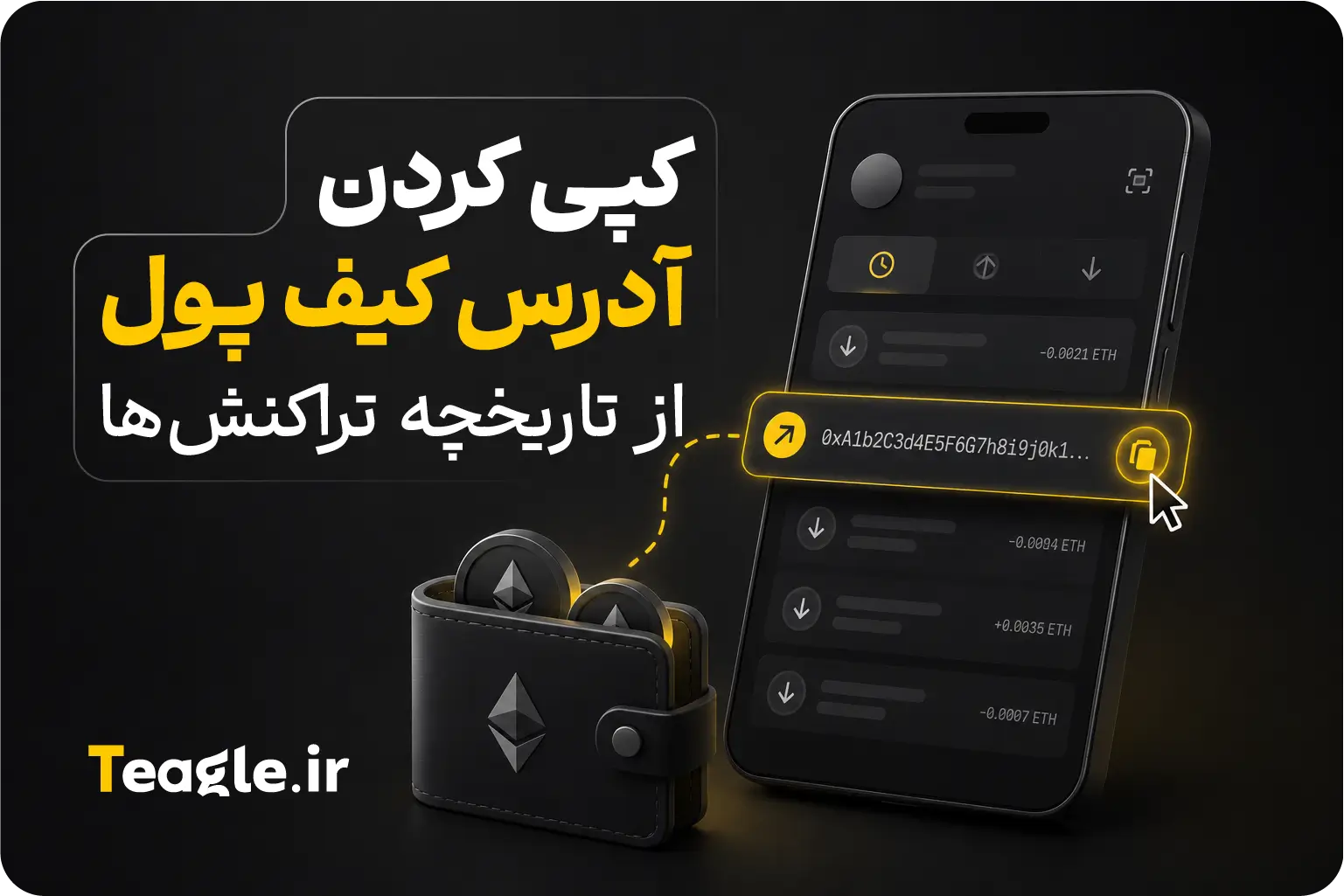
Mistake four: Copying a wallet address from your transaction history
One of the emerging scam methods in crypto is the Address Poisoning attack; an attack that exploits users' habit of «copying an address from history» to send assets to the wrong destination. In this method, the attacker creates an address very similar to your previous addresses and, by sending small transactions, gets it into your history so that on your next transfer you copy the fake address. To prevent this type of attack, just follow a few simple but vital steps:
- Try to double-check the characters of your intended address.
- Scanning a QR Code minimizes the chance of human error.
- Save your verified addresses in an Address Book. This is the best way to avoid mistakes in repeat transfers.
Mistake five: Keeping all your Tether on an exchange
Keeping all your assets on an exchange is a common mistake that many users don't notice until a problem arises. While exchanges are a suitable platform for buying, selling and trading, they are not designed for long-term storage of assets.
These platforms are constantly exposed to cyber threats, and in some situations access to accounts may be disrupted for security or technical reasons or legal restrictions. It therefore makes more sense to move assets you don't intend to trade daily to a personal wallet. Non-custodial wallets give you full control of your private key, reducing your dependence on intermediaries and significantly increasing the security of your assets.
Mistake six: Ignoring fees
USDT transfer fees vary widely across networks, and because of this difference many users end up paying extra, unnecessary costs without noticing. To choose the right network, you should weigh the fee, congestion and speed of each blockchain, because those few seconds of checking can make a several-fold difference in the final cost of the transaction.
For example, BEP20 is usually the cheapest option and TRC20 has a moderate fee and decent speed, while ERC20, due to congestion on the Ethereum network, is considered one of the most expensive options. Comparing just these few widely used networks shows that choosing the right network directly affects your final cost and can make the transfer far more cost-effective.
Mistake seven: Putting all your assets into Tether
Although Tether is a stablecoin and doesn't have sharp price swings, that doesn't mean it is risk-free. Holding all your assets in USDT can expose you to several important risks; risks that are usually overlooked but can have a serious impact under certain conditions. The most important of these are:
- Issuer risk — Tether's backing depends on the performance and transparency of Tether Limited.
- Legal risk — In some countries, restrictions or regulatory pressure are possible.
- Liquidity risk — In crisis market conditions, quickly converting large amounts of Tether is not always guaranteed.
For this reason, putting all your assets into Tether is an overly conservative strategy, and it is better to allocate only part of your capital to it, not all of it.
Mistake eight: Neglecting wallet security
Wallet security is the front line of protecting digital assets, and the slightest carelessness can lead to losing your capital entirely. One of the most common mistakes is storing the recovery phrase on a phone, laptop or cloud storage; in the event of a hack or malware, an attacker can easily gain access to all your assets.
Another dangerous mistake is using unknown or unofficial wallets; apps that may have been deliberately designed to steal assets. To reduce these risks, following a few simple but vital principles is essential:
- Keep the recovery phrase offline
- Use official, reputable wallets
- Enable security layers
- Update your wallet regularly
- Avoid connecting your wallet to unknown websites
Following just these few simple principles multiplies your wallet's security and minimizes the chance of losing your assets.
Mistake nine: Falling for promises of guaranteed returns on Tether
One of the most dangerous traps in the crypto market is trusting schemes that lure users with promises of fixed, guaranteed returns on Tether, when in this market no profit is guaranteed in advance. Many of these schemes are actually Ponzi projects whose payouts come not from real activity but from new people's incoming money. To spot this kind of scam, just watch for a few key signs:
- Promise of fixed returns: Any kind of guaranteed profit in crypto is a serious red flag.
- Lack of transparency in operations: If the revenue model isn't clear, it probably doesn't exist.
- Pressure to invite others: A pyramid structure is one of the clearest signs of a scam.
Put simply, in the crypto market, whenever «guaranteed profit» comes up, you should be more cautious than ever.
Mistake ten: Making large transfers without an initial test
One of the simplest and at the same time most vital principles in transferring crypto is making a small test before the main transfer. Sending large amounts directly without a test multiplies the risk of errors in the address, network or even the fee, and a small mistake can lead to irreparable loss. With a small test transfer, you can make sure the address is correct, the network is compatible and the wallet or exchange is working, and then send the main amount with peace of mind.
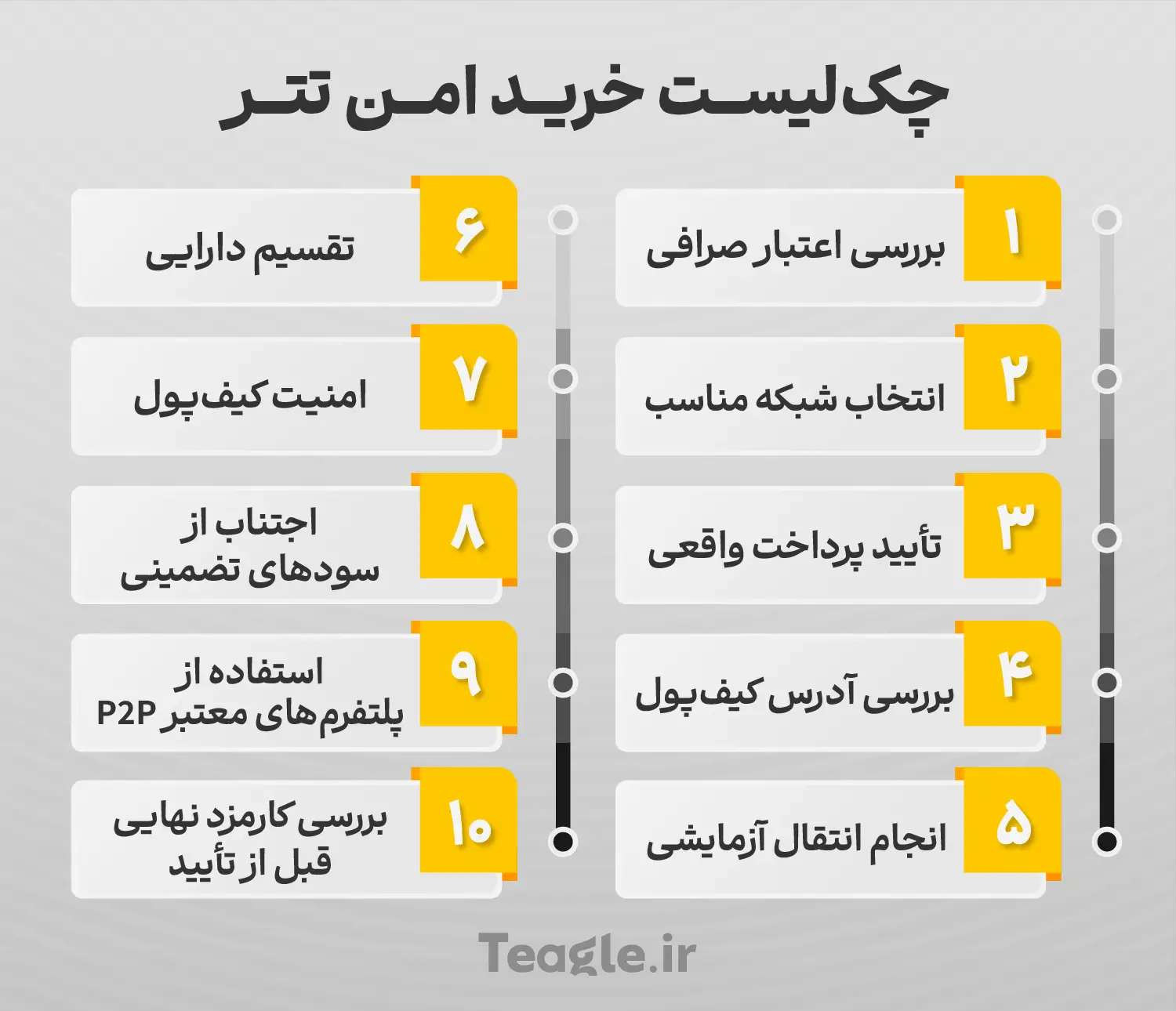
Checklist for buying Tether safely
For a safe, risk-free purchase, you need to check a few key points before every transaction. This checklist helps you avoid common mistakes, stay away from scams and buy Tether with more confidence:
- Check the exchange's credibility — Track record, trading volume, real user reviews
- Choose the right network — Fee, congestion and wallet compatibility
- Confirm the actual payment — Never trust a screenshot
- Check the wallet address — Double-check the destination address before confirming the transaction
- Make a test transfer — Before sending large amounts
- Diversify your assets — Holding all your capital in USDT carries risk
- Wallet security — Keep your Seed Phrase offline and use a reputable wallet
- Avoid guaranteed returns — Any fixed dollar return is a serious red flag
- Use reputable P2P platforms — Without time pressure and with identity verification
- Check the final fee before confirming — Some exchanges have hidden fees
Finally, it's worth remembering that Tether becomes a real shield for your assets only when you use it with awareness and financial discipline. Each of the mistakes discussed is a real example from the experience of users who lost a significant part of their capital through just one small lapse.
In a market where speed, excitement and risk are intertwined, knowing the networks, choosing a reputable platform, keeping your wallet secure, managing fees and ignoring promises of guaranteed profit are what draw the thin line between a smart investor and a victim. The future of crypto in Iran—despite the restrictions—is bright for those who take these principles seriously today and turn them into habits.
Contents of this article


Related articles
User reviews

Newest
 Upload image