Which Is the Best Stablecoin for Iranians?
Author
Hossein Haghshenas
Published
 2026/10/17
Updated
2026/10/25
Comments
1
Reading time
15 دقیقه


For someone who is Iranian and buys a stablecoin in Iran, a stablecoin holding its price at one dollar is not enough to make it a good one. Given our particular situation as Iranians, we need to be able to sell our assets when we need to, move them to another wallet, and not worry about them being frozen. This is what makes choosing the best stablecoin for Iranians so important. In this article, after explaining what a stablecoin is, we will review 3 well-known tokens suitable for Iranians: DAI, Tether and USDC.
What Is a Stablecoin?
A stablecoin is a type of cryptocurrency designed to keep its value close to a reference asset, such as the dollar. For example, the goal of Tether and DAI is for each unit to trade close to one dollar, unlike Bitcoin, which has no such fixed price target.
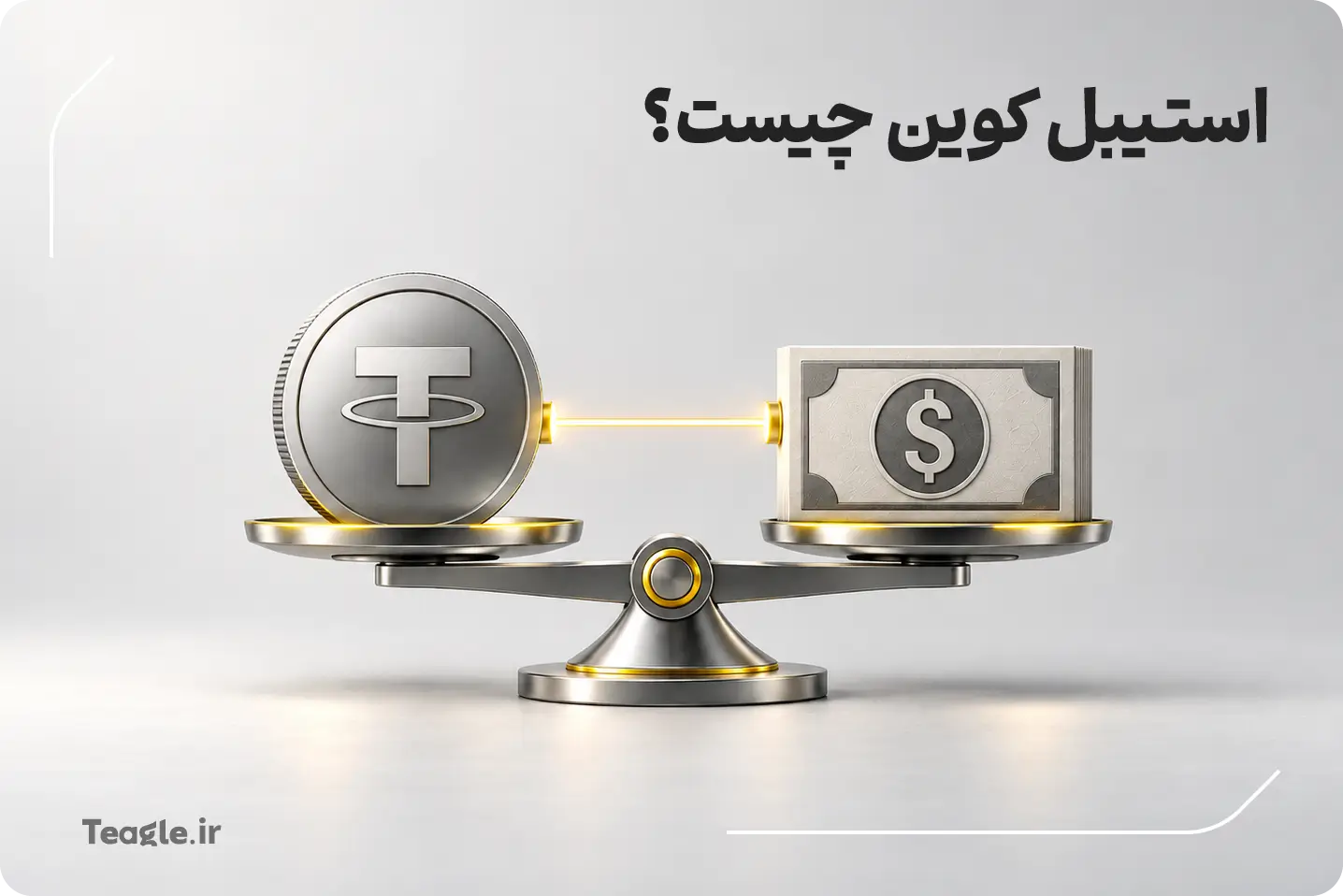
Stablecoins pursue price stability and protection from volatility in different ways. Holding financial reserves, backing by fiat currencies (the dollar, etc.), crypto backing, precious-metal backing, smart contracts and so on are among these methods. Even so, for reasons such as market confidence or other factors, the price may drift away from its reference asset; this is called a de-peg, or loss of the price peg.
The Role of Stablecoins in Protecting Capital Against Inflation in Iran
Many Iranians turn to stablecoins because they offer access to a dollar-denominated asset. When the Toman loses value against the dollar, the Toman price of a dollar stablecoin usually rises too, provided the coin itself has not de-pegged.
For example, suppose you hold 1,000 stablecoins and the dollar rate rises from 250 thousand Toman to 270 thousand Toman. Leaving aside other factors such as market conditions, the value of your assets goes up from 250 million Toman to 270 million Toman. As we can see, neither the number of your stablecoins nor their dollar value has changed; what has changed is the fall in the value of Iran's currency against the dollar.
Of course, a rise in the dollar rate does not always match inflation . Given Iran's particular economic situation, living costs may rise while the dollar stays flat or even gets cheaper for a while. So a stablecoin can cover part of the risk of the national currency losing value, but it does not fully hedge inflation or guarantee a profit.
Why Is Using Tether (USDT) Risky for Iranians?
The Tether stablecoin moves on blockchain networks , but its issuance and redemption are managed by a specific company. This is what centralization of an asset means: some of the key powers over the asset, including managing reserves and imposing restrictions, sit with a specific entity.
Tether Limited uses its administrative control over the token contract to blacklist a specific address. After that, USDT transfers from that address can be blocked, even if the wallet owner still has access to the wallet. This does not mean every cryptocurrency in that wallet is locked; the restriction applies at the level of the Tether token.
Since Iran is explicitly included in Tether's list of prohibited jurisdictions, this risk applies to us. Tether's document states:
“Restrictions on Prohibited Persons. Every Prohibited Person is strictly prohibited from directly or indirectly holding, owning or operating a Tether Tokens Wallet in any way or otherwise transacting on or using the Services.”
As a result, moving Tether from an exchange to a personal wallet does not remove Tether's power to freeze it. A personal wallet reduces your dependence on the exchange, but the rules of the USDT contract still apply. Tether also provides for the power to freeze tokens in its terms of use.
The Risk of International Sanctions and Detection of Iranian IPs
As we mentioned, Tether lists Iran among prohibited jurisdictions in its terms of use. On the other hand, the company's freezing policy also covers action against addresses linked to sanctioned persons. But these restrictions should not be confused with the claim that «any Iranian who opens their wallet gets frozen immediately».
To understand the issue, two points should be considered:
1. A crypto exchange or wallet may process information such as your IP and approximate connection location. A non-custodial wallet does not necessarily mean this information is not collected; for example, the privacy policy of MetaMask mentions IP processing in some services:
“For IP addresses in particular, we may temporarily process your IP address only where required for some of our Offerings (depending on your MetaMask settings) to provide the best possible experience for MetaMask users. This includes, for example, the prevention of DDoS attacks (see below for more details).”
2. The history of blockchain transactions, the links between addresses and the movement of assets can serve as a basis for investigation.
For example, in an official announcement on 28 September 2026, Tether said it had frozen about 550 million USDT from individuals linked to the Central Bank of Iran and other sanctioned persons. That said, this news concerns specific addresses and should not be generalized to freezing the assets of all Iranian users.
So changing your IP alone does not erase your transaction history or the issuer's restrictions, and it is no guarantee against being frozen.
Types of Stablecoins in the Crypto Market
When choosing a stablecoin, there are two key questions:
1. What backs the stablecoin?
2. Does any person or entity control it?
Below, based on these questions, we have divided stablecoins into centralized and decentralized and covered the types of stablecoins in the crypto market.
Centralized Stablecoins (Fiat-Backed)
In this model, a company manages the backing reserves and is responsible for issuing and redeeming the token. These reserves are not necessarily dollar deposits; they may also include government bonds and other financial assets. Tether and USDC are well-known examples of this group.
The advantage of this structure is that there is a specific party responsible for handling issues. On the other hand, the user becomes dependent on the issuer, the custodians holding the reserves, and their freezing policies.
Decentralized Stablecoins (Crypto-Backed and Smart Contract)
In the decentralized model, assets are locked in a smart contract and stablecoins are issued against them. The collateral value is usually higher than the debt, so a drop in its price does not immediately leave the backing insufficient. A mechanism for selling risky collateral also helps keep the system balanced. DAI originates from this structure.
Centralized vs. Decentralized Stablecoins
|
Feature |
Centralized stablecoin |
Stablecoin with a decentralized mechanism |
|
Management |
Issuing company |
Smart contracts |
|
Typical backing |
Cash and financial assets |
Crypto, or a mix of crypto and financial assets |
|
Direct freeze possible |
Yes |
Generally not, but it depends on the stablecoin's contract |
|
Verifying the backing |
Company reports and independent attestations |
On-chain data, plus external documents for off-chain collateral |
|
Main risks |
Dependence on the issuer and sanctions risk |
Fall in the value of the backing collateral, no issuing entity to turn to for follow-up |
The Best Stablecoins for Iranians Reviewed
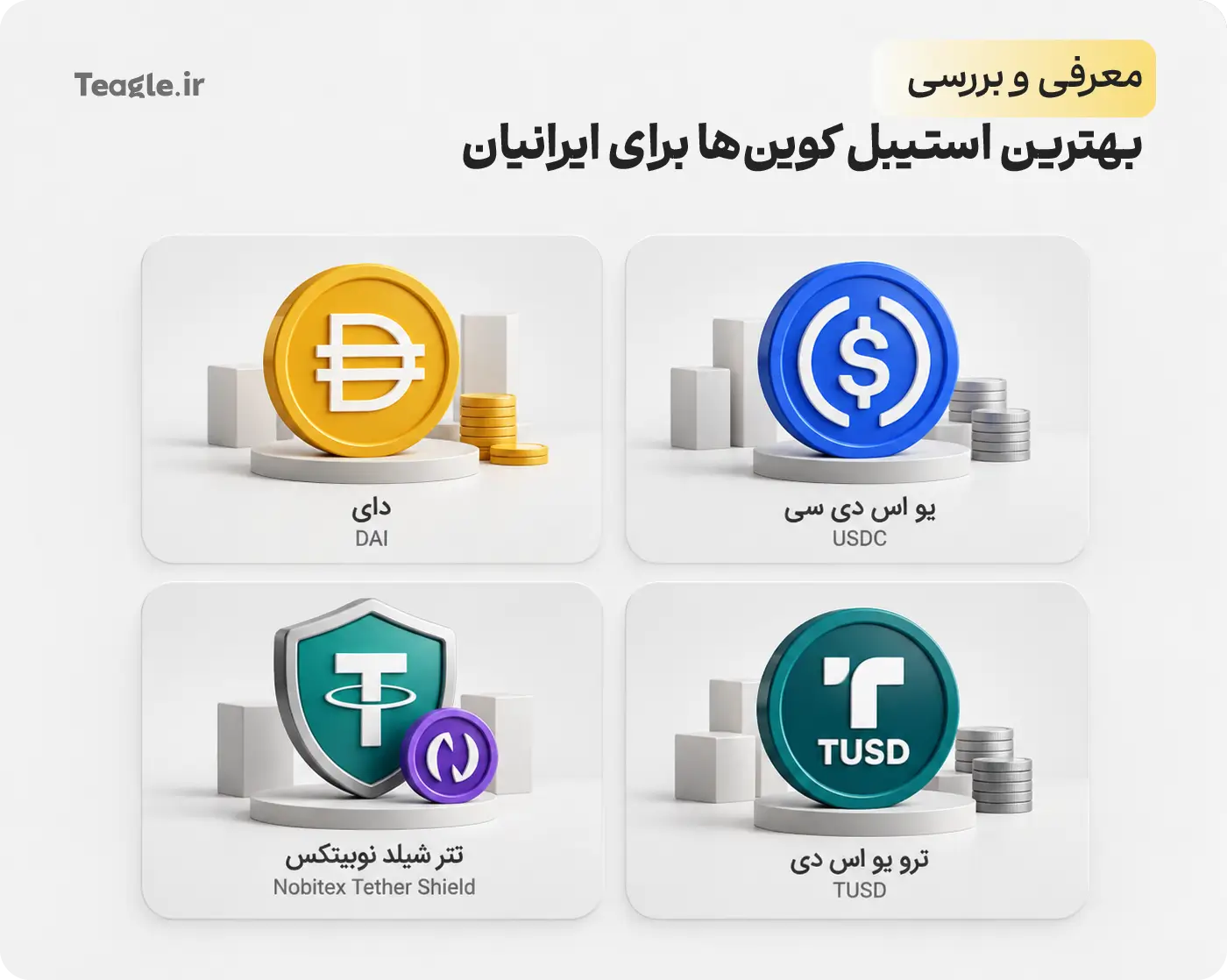
The right option for day trading is not necessarily the best choice for holding over several months. For trading, market depth and conversion costs matter a lot; for holding, the quality of the backing, transferability and freezing risk carry more weight.
1. DAI: an option to reduce direct freeze risk, not full immunity
DAI's most important advantage in this comparison is the structure of its main contract on Ethereum. Reviewing the contract's code shows it has no USDT- or USDC-style blacklist or address-freezing feature, and it is not issued by a specific entity. So an issuer like Tether cannot use the same mechanism to stop DAI transfers from a specific address. That said, DAI's documentation also points to the risk of some collateral deposited into the system being frozen. So the absence of a direct freeze on user balances is not the same as the absence of risk in the backing.
2. USDC: high transparency, but with centralization and sanctions risk
USDC is issued by Circle. The company publishes reserve data weekly and provides monthly third-party attestations on reserve adequacy. This reporting is useful for checking the backing, although it does not guarantee the asset is risk-free.
For users residing in Iran, the main limitation remains: Circle lists Iran among restricted regions and reserves the right to block USDC transfers to and from specific addresses. So buying USDC instead of Tether does not solve the freezing problem caused by centralization:
“located, organized or resident in a country, territory or geographical region which is itself the subject or target of any territory-wide Sanctions (a “Restricted Territory”) (currently, Cuba, Iran, North Korea, and the Ukraine regions of Crimea, Donetsk, Luhansk, Kherson, and Zaporizhzhia).”
So if your main goal is to reduce sanctions and freezing risk, it is not a definitive alternative to Tether.
3. Nobitex Tether Shield: a solution introduced to reduce Tether transfer risk
It is worth noting that Tether Shield is not a separate stablecoin. Nobitex had, in its earlier announcements, introduced the option of transferring Tether in a shielded form, with the aim of protecting privacy and reducing freeze risk. So it should not be considered alongside DAI and USDC as a token with a different backing and issuer.
It should also be noted that reducing the information visible in a transfer method does not, in itself, remove the powers of the Tether company under the USDT contract, part of which we mentioned earlier in this article. Sanctions developments also matter when assessing this option; the US Treasury Department announced sanctions on Nobitex in 2026. As a result, Tether Shield should be reassessed in light of current conditions.
4. TrueUSD (TUSD) and other alternatives
TUSD is a centralized stablecoin that aims to hold a value close to one dollar. Its direct issuance and redemption depend on financial infrastructure and identity verification processes; so simply having a different name from Tether does not make it independent of centralized entities.
Among decentralized options, BOLD from the Liquity V2 protocol is also worth looking at. Its documentation describes WETH, wstETH and rETH collateral and the absence of a manual freeze function in the protocol. Even so, smart contract, collateral and liquidity risks remain; you should also check whether you can buy and sell it through the route you use.
Step-by-step guide to choosing and buying the best stablecoin in Iran
Before buying, map out the full path of the asset: where you buy it, which network you withdraw on, where you hold it and, finally, how you sell it. A token may be technically suitable but hard or costly to sell in the market you use.
Assessing your risk tolerance and holding period
The first step is defining why you are buying. If you want a stablecoin for the gap between two trades, the bid-ask spread, order book depth and transfer cost matter more. If you plan to hold for several months, you need to look more seriously at its backing and dependencies.
Before choosing, answer these three questions:
- If the price moves away from one dollar, will I be able to sell or convert?
- If the exchange halts withdrawals, how much of my assets will be affected?
- Do I know how to store a recovery phrase and transfer on the correct network?
For money that will go toward rent, medical care or essential expenses in the near future, factor the possibility of a price drop and access disruption into your decision. Spreading assets across several names only creates real diversification when you understand the risks they share.
Why choosing the right blockchain network matters: fees and transaction speed
The second step is choosing a network compatible with both the source and the destination. Before buying, make sure the exchange allows withdrawals of that token on the network you want, and that the destination wallet or exchange accepts exactly the same network and token version. Check 4 things:
1. Final withdrawal fee: The amount the exchange charges is not necessarily the same as the network's own cost.
2. Cost of later transfers: To send from a personal wallet, you usually need the network's native coin, such as ETH, TRX or SOL.
3. Token version: A native token and a bridged version may have similar names but different risks.
4. Arrival time: How fast a transaction is recorded is not the same as how long it takes to be confirmed and credited to your exchange balance.
Choosing a cheaper network does not change how centralized the issuer is. Using a cross-chain bridge can also create a new dependency on the bridge's security.
How to buy safely from Iranian exchanges and transfer to non-custodial wallets
The third step is buying and making a test transfer. The general order is as follows:
1. Check the exchange's security track record, withdrawal terms, fees and support.
2. Create an account and complete identity verification through the official route.
3. Set a unique password and enable two-factor authentication.
4. Fund the account according to the exchange's rules and check the final purchase price.
5. In your personal wallet, get the receiving address for the token on the correct network ready.
6. First transfer a small amount, respecting the minimum withdrawal and deposit.
7. Once you see the correct balance at the destination, decide about transferring the rest.
A test transfer only helps verify the address and route; it is no guarantee against a future freeze or backing problems. Also keep the purchase receipt and transaction ID in case you need to follow up.
Critical security tips for holding stablecoins in Iran
Holding security has three parts: the security of the token itself, the security of where it is held, and the user's behavior. Choosing the right stablecoin cannot make up for a sending mistake, a leaked recovery phrase or signing a malicious request.
Using reputable hardware and software wallets; non-custodial
Control of the private keys should be in your own hands. This is different from the stablecoin inside the wallet being decentralized.
A hardware wallet can keep the private key separate from the usual phone and computer environment. A software wallet is more convenient for everyday use, but device security becomes more important. In either case, check support for the token and network before transferring; the list of supported assets can vary between models and apps. For safer storage:
- Get the app and updates through official channels.
- Do not store your recovery phrase in messaging apps, email or cloud storage.
- Do not connect your main savings wallet to unknown websites.
- Carefully check the destination address and the details of any signature request.
- Do not trust «asset recovery» requests from unknown support agents.
A hardware wallet also does not stop the issuer of Tether or USDC from enforcing restrictions. Its job is to protect the private key.
Following layered security principles and not connecting directly to foreign platforms with an Iranian identity
Before connecting a wallet or transferring assets to a foreign platform, read its terms of service. If it does not accept users residing in Iran, the fact that the site opens or allows deposits does not mean you are permitted to use it or that withdrawals are guaranteed.
Protecting your privacy is different from providing false identity information. Using a rented account or other people's documents can put your access at risk. Changing your IP also does not replace checking the terms of service.
To reduce risk in trading, share identity information only with services that are necessary and verifiable, keep your savings wallet separate from the wallet you use to interact with apps, and do not grant token spending approvals without checking them. Some approvals let a contract move your assets until the access is revoked; visibly disconnecting the wallet from a site does not necessarily revoke this approval.
Contents of this article


Related articles
User reviews

Newest
 Upload image