
What Is Options Trading? An Introduction to Options and Their Concepts

Author
Marzieh Mazaheri
Published
 2026/08/24
Updated
2026/10/25
Reading time
6 دقیقه


Options trading is one of the key tools of the financial markets, letting you decide on buying or selling an asset in the future without being obligated to make the trade from the outset. In fact, you are only buying the right to choose; a right you can use if market conditions are favorable, or simply decline to exercise.
To better understand this concept, imagine you want to buy a house. The owner agrees to lock in the sale price for a set period in exchange for a down payment. If the house price rises during this period, you still have the right to buy it at the agreed price and profit from the price difference. But if the market moves against your expectations, you are under no obligation to buy, and you only lose the down payment you made.
This very feature, having the right to choose without an obligation, has made options trading a flexible tool for many traders. These contracts make it possible to enter trading positions with a defined potential loss; however, understanding how they work before you start trading is very important, because options have a more complex structure than buying and selling the asset directly.
What Is Options Trading?
Options trading refers to the process of buying and selling option contracts. In this type of trading, you do not trade an asset such as a stock or cryptocurrency directly; instead, you buy or sell a contract that gives you the right to buy or sell that asset under specific conditions.
The price of this contract is called the premium. Every option contract is defined by three main components:
- the strike price,
- the expiration date
- and the premium.
These three factors determine what right the contract holder has, until when they can use it, and how much they paid to obtain this right.
What Is a Call Option?
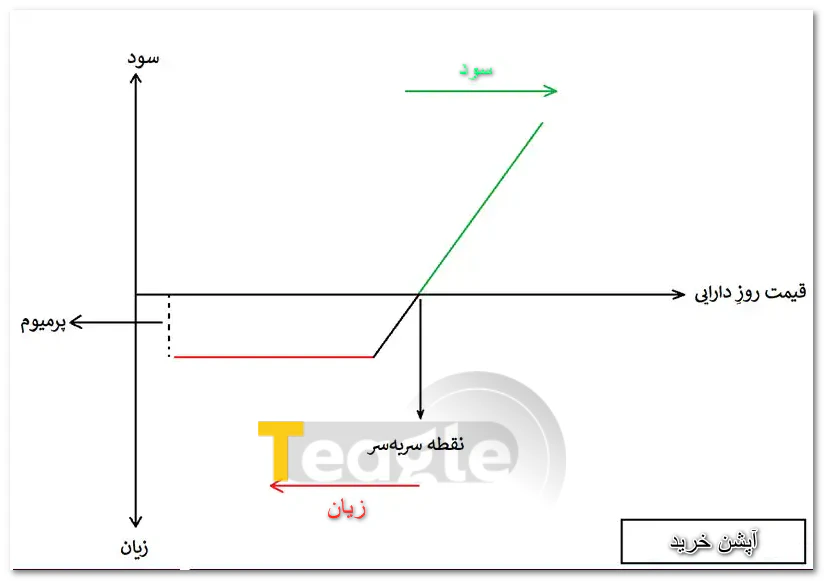
A call option is a contract that gives its holder the right to buy an asset at a specific strike price on or before a set date.
If the asset's market price rises above the strike price, the call holder can exercise the contract and buy the asset at the lower, predetermined price. In addition, in many cases the trader does not even need to exercise the contract and can sell it to someone else before expiration as its value rises, making a profit.
What Is a Put Option?
A put option gives the contract holder the right to sell an asset at a specific strike price before the expiration date.
If the market price falls below the strike price, the put holder can sell the asset at the higher, agreed price. For this reason, many investors use put options as a tool for hedging risk, or as a kind of insurance against a possible drop in the value of the assets they hold.
Trading the Contract Before Expiration
Contrary to what many people think, most option contracts never get exercised. Traders usually buy and sell the contracts themselves and make a profit or loss from changes in their value.
The value of an option contract constantly changes under the influence of factors such as the price of the underlying asset, the time remaining until expiration and overall market conditions. So a trader may buy a contract, sell it at a profit after its value rises, and never own the underlying asset.
How Do Option Contracts Work?
Every option contract is made up of several basic parts that define the terms of the trade, and knowing them is essential to understanding how this market works.
Expiration Date
The expiration date is the day the option contract's validity ends. Once this date is reached, the contract expires and can no longer be used. The expiration period varies by product and can range from a few days to several years. For this reason, when choosing a contract you should always consider the time remaining until expiration.
Strike Price
The strike price is the price at which the contract holder has the right to buy or sell the asset. This price is set when the contract is created and stays fixed throughout the contract's life, even if the asset's market price experiences sharp swings.
Premium
The premium is the amount the buyer pays to obtain the right to buy or sell the asset. This amount is effectively the price of the option contract itself.
The size of the premium is influenced by factors such as the current price of the underlying asset, the time remaining until the expiration date and the level of market volatility. For the option buyer, the premium is the maximum possible loss; because if the contract ultimately expires worthless, only the amount paid to buy it is lost.
Contract Size
The size of each option contract depends on the type of underlying asset. For example, in the stock market each contract is usually equal to 100 shares. But in the cryptocurrency options market, contract sizes can vary; so checking each contract's specifications before trading is very important.
Key Terms in Options Trading
To analyze and understand the status of an option contract, traders use various technical terms, the most important of which are the contract's profit or loss status and the risk measures known as the Greeks.
In the Money (ITM), At the Money (ATM) and Out of the Money (OTM)
These three terms show how the current market price relates to the contract's strike price.
For a call option, when the market price is above the strike price, the contract is «in the money» or ITM. If the two prices are roughly equal, the contract is ATM or «at the money», and when the market price is below the strike price, the contract is considered OTM or «out of the money».
For a put option this relationship is reversed, because the contract becomes profitable when the market price falls below the strike price.
|
Option Type |
ITM (in the money) |
ATM (at the money) |
OTM (out of the money) |
|
Call |
Market price above strike price |
Market price equal to strike price |
Market price below strike price |
|
Put |
Market price below strike price |
Market price equal to strike price |
Market price above strike price |
The Greeks
The Greeks are a set of risk measures that traders use to gauge how much various factors affect the price of an option contract.
Each of these measures shows a different kind of price sensitivity and helps the trader gain a more precise understanding of the contract's risk. The five main Greeks are delta, gamma, theta, vega and rho.
|
Greek |
Definition |
|
Delta (Δ) |
Measures how much the option price changes for every 1 dollar change in the price of the underlying asset. |
|
Gamma (Γ) |
Shows the rate of change of delta for every 1 dollar change in the price of the underlying asset. |
|
Theta (θ) |
Measures how much the contract's value declines as time passes and the expiration date approaches. |
|
Vega (ν) |
Shows the option price's sensitivity to changes in market volatility; higher volatility usually increases the option's value. |
|
Rho (ρ) |
Measures how much the option price changes in response to a 1 percent change in interest rates. Positive rho means the value rises as interest rates rise, and negative rho indicates the opposite effect. |
The Difference Between American and European Options
In terms of when the right can be exercised, option contracts fall into two main styles: American and European.
With an American option, the contract holder can exercise their right at any time before the expiration date. This feature gives the trader more flexibility.
By contrast, a European option can only be exercised on the expiration day, and the contract cannot be used before then. In both types, put options can still be used as a tool for risk hedging .
What Are Cryptocurrency Options?
Cryptocurrency options work no differently from traditional options; the only difference is the type of underlying asset.
In this market, the underlying asset can be a cryptocurrency such as Bitcoin (BTC) or Ethereum (ETH). Traders use these contracts to take trading positions on price swings or for risk management of their crypto portfolio.
Who are options trades suitable for?
Options trading is mostly suitable for traders who have a solid background in financial markets and are familiar with the concepts of risk and derivatives . Newcomers are usually advised to first learn the basics of trading and how crypto markets work, and then move into the world of derivatives and options trading.
Keep in mind that options are not a simple tool for starting to trade. Understanding concepts such as the premium, strike price, expiration date, how contracts are valued and the Greeks requires training and experience. If you are at the start of your journey in financial or crypto markets, it is better to first build your knowledge of basic trading and then move on to options trading.
Frequently asked questions about options trading
What is the difference between options trading and futures contracts?
The main difference between these two instruments lies in the concept of right versus obligation. In options trading, the buyer only has the right to buy or sell the asset and is not required to execute the contract. In futures contracts, however, both parties to the trade are obligated to execute the contract at the agreed price on the specified date.
What is the maximum loss when buying an option?
For an option buyer, the maximum loss equals the premium paid. If the contract is OTM at expiration and becomes worthless, the trader only loses the amount paid to buy the contract and will not suffer a loss equal to the full value of the underlying asset.
Can you lose more than the premium in options trading?
If you are the buyer of an options contract, no; your loss cannot exceed the premium.
Source: Binance
Contents of this article


Related articles

User reviews

Newest
 Upload image