
An Introduction to Leverage, or Leveraged Trading

Author
Admin
Published
 2026/03/05
Updated
2026/10/25
Reading time
5 دقیقه


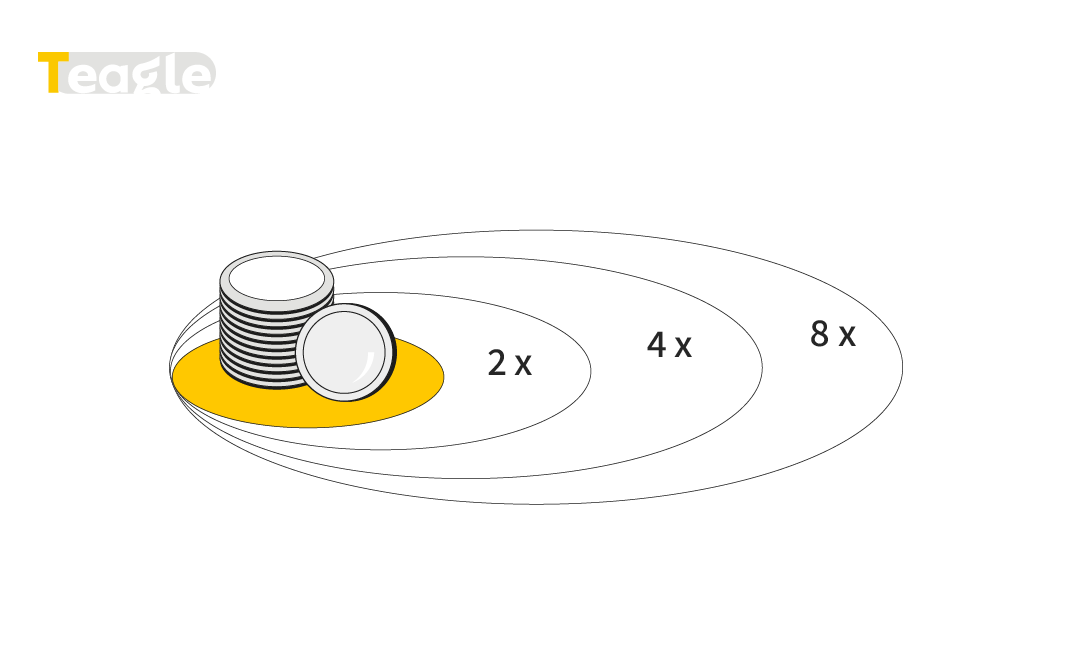
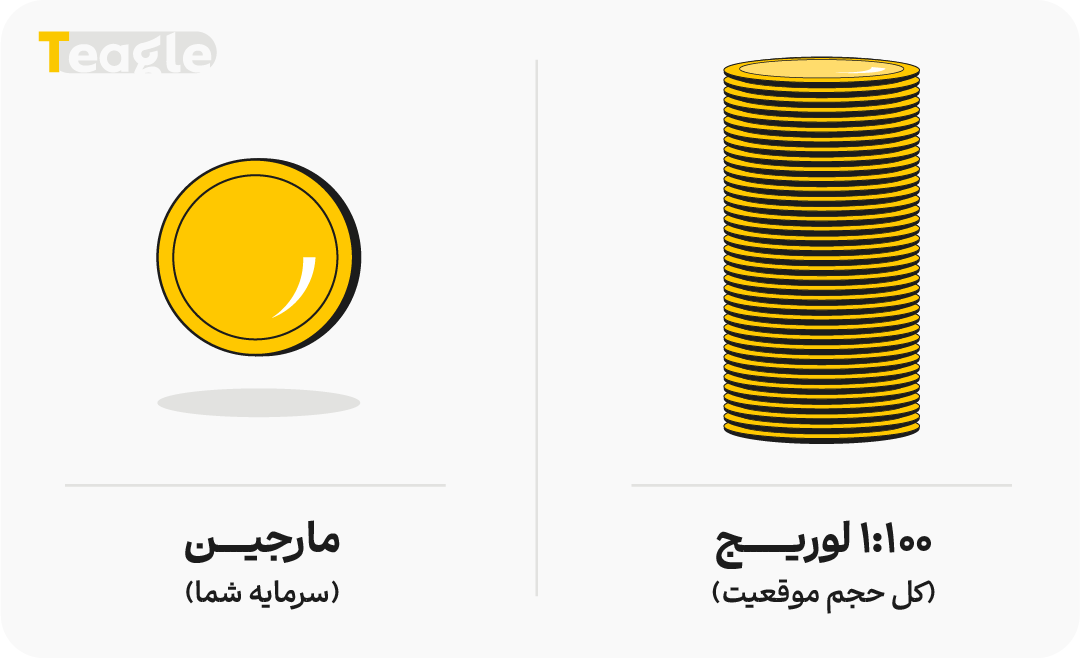
When we talk about leverage trading, we are really referring to using borrowed capital to increase the size of your trades. To understand it better, imagine you enter a trade with 1:100 leverage. This means that for every one dollar of your own capital, the broker 99 dollars more is lent to you so you can trade up to 100 dollars. Understanding leverage (Leverage) or leveraged trading in tradingis the first step to using it successfully. Understanding what trading leverage is requires accepting that this tool multiplies both profits and losses. These are all the topics we cover in this article.
What does leverage (Leverage) or gearing mean in trading?
Put simply, leverage is a tool that lets a trader control much larger trading positions with relatively little capital. The concept comes from the English termleverage which means amplifying force or power. Trading account leverage refers to the maximum ratio a broker sets for your trading account. This ratio defines your trading power. For many people, leverage simply means borrowing money to make a bigger trade. In other words in practice, no physical money is deposited into the account; instead, a smaller margin is used to control a larger position.
The difference between leverage in the forex and crypto markets
Although the core concept of leverage is the same in both financial markets, the way it is applied, its maximum levels and the regulations governing it differ significantly, due to the different structures of the two markets.
|
Feature |
Forex market (Forex) |
Crypto market (Crypto) |
|
Nature of leverage |
Usually offered by brokers. |
Offered by centralized (CEX) or decentralized (DEX) exchanges. |
|
Maximum leverage |
Depending on regional regulations, ranges from 1:30 to 1:500 (even higher in some regions) |
Can be very high; sometimes up to 1:100 or even leverage of and much higher (on some platforms) for futures trading. |
|
Legal oversight |
Supervised by traditional financial authorities (although the strictness of oversight varies). |
Oversight varies and is in some cases limited or decentralized |
|
Trading hours |
24 hours a day, 5 days a week. |
24 hours a day, 7 days a week. |
Understanding the difference between leverage in forex and crypto is vital for traders who follow both markets. While leverage in forex is usually tied to standard lot sizes, leverage in crypto is often directly linked to futures trading and much higher leverage levels. Leverage in crypto often refers to open positions with high leverage in perpetual contracts. In crypto, futures leverage is far more common than spot.
How is leverage calculated?
In short, the main formula for understanding leverage and trading power is:

To understand how leverage works, you need to know how it is applied. Leverage levels are generally expressed as ratios such as 1:10, 1:50, 1:100, 1:500 . These ratios show how many units of trading power you have for each unit of your own money. High leverage refers to larger ratios (such as 1:500) and low leverage to smaller ratios (such as 1:10).
Suppose you have 1000 dollars in your account and decide to use 1:100 leverage:
1. Your capital (margin): 1000 dollars
2. Leverage: 100
3. Trade size you can control: 100000 dollars
This means that with only 1000 dollars of your own money, you can open a position worth 100,000 dollars. This extra buying power is exactly what leverage does.
Likewise, if you trade with 1:10 leverage, with 1000 dollars you can take a position worth 10,000 dollars. This concept ties directly into deciding «which leverage is best» or questions such as «what leverage should I set», because the higher the leverage, the greater the volatility risk and the chance of getting liquidated.
A look at leveraged trading strategies at brokers and exchanges
Many beginner traders ask, for example, «what is the best leverage for 100 dollars» or «what is the best leverage for 100 dollars in crypto». The key point is that there is no best leverage; rather, proper risk management along with choosing the right leverage for your strategy is what matters. The right leverage in forex and crypto depends entirely on your skill level and risk tolerance. This leads to a split between strategies:
1. Low-leverage strategies: Traders who use low leverage (such as 1:10 or 1:20) focus more on fundamental and long-term analysis. They can allocate less risk to each trade and have less need to worry about the minimum leverage in forex, since the margin they need to hold a position is larger.
2. High-leverage strategies: Day traders or scalpers may use high leverage in forex (for example 1:200 or more), especially if they avoid low-leverage brokers. For these traders, the best leverage may be the high leverage that allows them, with spread capital, manage more trades with small but frequent profits. Of course, this strategy requires a deep understanding of risk management.
How to change leverage in forex trading?
The ability to change leverage in MetaTrader 4 Changing leverage in MetaTrader 5 is an important feature that gives traders more control over their account. Be sure to note that this setting determines your account's default leverage, not the leverage of each individual trade, which in forex is determined by lot size. Leverage in MetaTrader is usually set through the broker's client area or directly in newer platforms such as MT5 . To change leverage at Alpari or any other broker, you usually need to go to the client portal.
Pros and cons of leverage in trading
For traders, using leverage is a double-edged sword, a win-or-lose proposition of sorts. Understanding that leverage can have both positive and negative effects is essential for staying in the game and preserving capital in financial markets.
Advantages of leverage
- Increased buying power: The ability to open large trades with little capital is the main use of leverage .
- Improved return on capital: If trades are successful, the return on your initial capital rises sharply.
- Better hedging: In strategies such as hedging, suitable leverage on gold or currency pairs can help manage positions.
Disadvantages of leverage
- Magnified losses: If the market moves against your prediction, losses are magnified in the same proportion according to high leverage .
- Liquidation risk: At high leverage levels in forex, a small market move can wipe out your entire margin, which is called a Call or liquidation.
- Fees and interest: Although the cost of leverage is charged as overnight interest (Swap), these costs become significant in long-term trades.
What is the difference between leverage and margin in forex?
Many traders, especially those just getting familiar with forex account leverage, do not properly understand the difference between leverage and margin. These two concepts are completely interdependent, but they play different roles.
|
Concept |
Definition |
Role in trading |
|
Leverage (Leverage) |
A ratio or multiplier that increases your buying power (e.g. 1:100). |
A factor that amplifies profit and loss. |
|
Margin (Margin) |
The portion of your real capital that is locked with the broker as collateral to keep a leveraged trade open. |
The collateral required to open a position. |
In other words, margin is the cost you pay to use leverage. The relationship between margin and leverage is that the higher your leverage, the less margin is required to open a given trade size. This is also the difference between lot and leverage: the lot, or contract size, determines the size of your position, while leverage determines how much margin must be blocked for that lot. This difference is the basis of the concept of lot and leverage in forex.
Frequently asked questions about leverage and leveraged trading
What is the relationship between lot and leverage?
Leverage and lot are two inseparable components of standard forex trading. A lot is the unit for measuring trade volume (standard, mini, micro, nano). Leverage determines what fraction of your capital you need to control that lot. If leverage is high, you can open a larger lot with the same margin. Understanding the difference between leverage and lot (or "lotage", a term wrongly used in Persian whose correct form is simply lot) is key to managing positions.
Is using leverage suitable for gold trading too?
Buying gold with leverage is very common. The precious metals market, especially gold (XAU/USD), is quite volatile. Using leverage on gold can be profitable, but it also carries high risk. Suitable leverage for gold is usually chosen more conservatively than for volatile currency pairs to stay safe from sudden swings. In the crypto market, leverage is usually available in futures or margin trading, not in spot trading.
Which brokers offer the highest leverage?
Some brokers in international markets offer very high leverage. For example, some well-known brokers outside Europe's strict regulatory jurisdiction may offer leverage of 1:500 or even higher (such as brokers with leverage of 2000 or brokers with leverage of 5000). For example, LiteFinance broker's leverage has offered competitive terms in the past. However, note that a broker with low leverage usually has greater stability and regulatory credibility.
Related articles
Contents of this article


Related articles

User reviews

Newest
 Upload image