
10 Key Risk Management Standards in Trading

Author
Admin
Published
 2026/06/22
Updated
2026/10/25
Reading time
5 دقیقه


You may have heard the saying that «analysis is only half the path to success in trading». But what is the other half? It seems that the other half is nothing but «risk management in trading». Even so, some traders, despite their accurate analyses, lose their capital because they lack a clear framework for risk management. In this article, we try to review 10 important risk management standards in trading that can form the foundation of a sustainable trading strategy.
What is risk management in trading and why does it matter?
Risk management in trading refers to a set of principles and decisions aimed at controlling potential losses in each trade as well as across the whole trading account. In other words, financial risk management looks at how much of our capital we are willing to risk in the worst-case scenario if things go wrong.
Risk management matters because financial markets are fundamentally driven by probability. As a result, no analysis or decision can predict the outcome of a trade in advance with complete certainty. That is why professional traders, instead of making a futile effort to eliminate risk entirely and bring it down to zero, focus on controlling and managing it. This is what financial literature refers to as the objectives of financial risk management: preserving capital and increasing the account's sustainability over the long term.
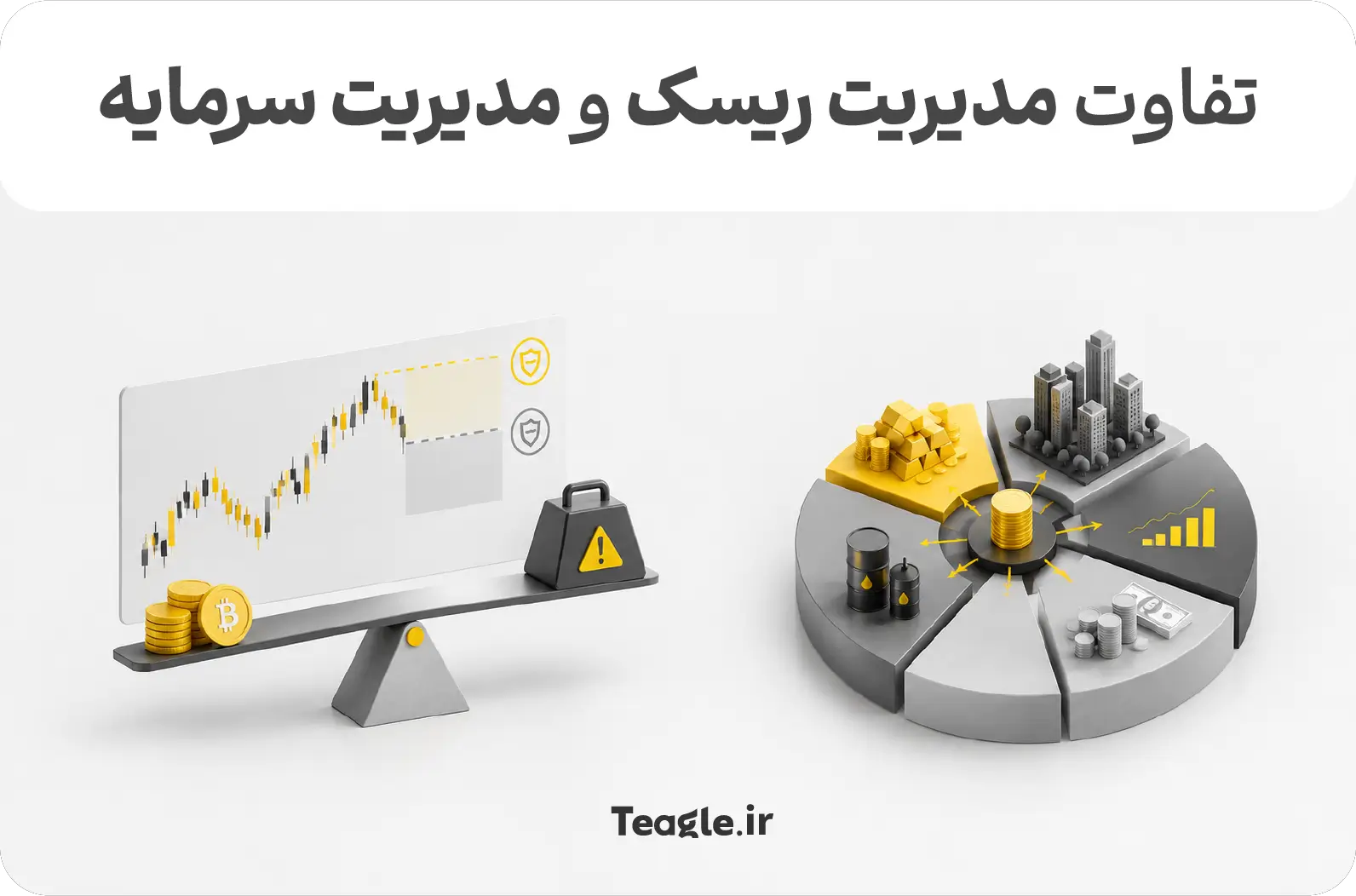
The difference between risk management and money management
Although the 2 concepts of risk management and money management in trading are sometimes used together or interchangeably, they are entirely distinct. Risk management is more about the decisions made during a trade, such as where to place the stop loss or what the risk-to-reward ratio should be. Money management in trading, on the other hand, refers to how total assets are allocated across different trades, markets and assets, and decides what percentage of capital enters the market. Put simply, risk management answers how much we should risk on this trade, while money management deals with how we should divide our capital across the market and our portfolio.
Types of risk in financial markets (forex, futures, crypto)
Risk in trading can differ in nature across markets. In forex risk management, for example, currency rate fluctuations and economic news releases are considered the main sources of risk. An important point in forex risk and money management is that risk management in this market is usually considered alongside managing the amount of leverage used, since this market allows the use of high leverage.
In futures market risk management, the main risk comes from 3 factors: sharp price volatility, the expiry of futures contracts and potential margin calls. In the crypto market, the sharp price volatility of cryptocurrencies, the low liquidity of some of them and the risk of holding assets in software wallets are among the important factors that must be considered in managing risk in digital financial markets.
Risk management standards in trading
Risk management standards are rules that have been proven over time, either through empirical trial and error or based on theoretical models tested in the real market. Accordingly, specific frameworks have been established for identifying and controlling risk, and below we cover 10 of these risk management standards:
1. Set a stop loss for every trade
The first and most important rule of risk management in trading is setting a stop loss, or Stop Loss, before entering a trade. A stop loss is a price level at which, if reached, the trade is closed automatically to prevent further losses. The stop loss should be set based on the market's structure and technical analysis , not merely on an arbitrary number in the trader's head.
2. Set a take profit and exit on time
Setting a take profit plays as important a role as the stop loss in locking in trading profits. Some traders, because they fail to manage their emotions, don't set a take profit or change it before it is triggered, and this always carries the risk of the market reversing. We should strive to stick fully to our predetermined plan, even if the market continues its trend after we exit the trade.
3. Respect the risk-to-reward ratio (Risk/Reward Ratio)
The risk-to-reward ratio is the relationship between the amount of risk and the potential profit in a trading strategy, and it is important in risk management. In general, a lower risk-to-reward ratio is better for a trade.
4. The 2 percent rule: maximum allowed risk per trade
This is not an absolute rule. But in general, according to the 2 percent rule, no single trade should put more than 2 percent of the total account capital at risk. This rule ensures that even after several consecutive losses, our trading account doesn't suffer serious damage and the opportunity to recover and make a profit still remains. Keep in mind that rules and strategies vary depending on the timeframe and the type of market.
5. Set position size (lot) based on account risk
A trader's position size generally shouldn't be fixed or chosen arbitrarily; instead, we can calculate it from the stop loss distance and the allowed risk percentage. In this case, we first need to determine our account risk and stop loss, and then adjust the position size accordingly.
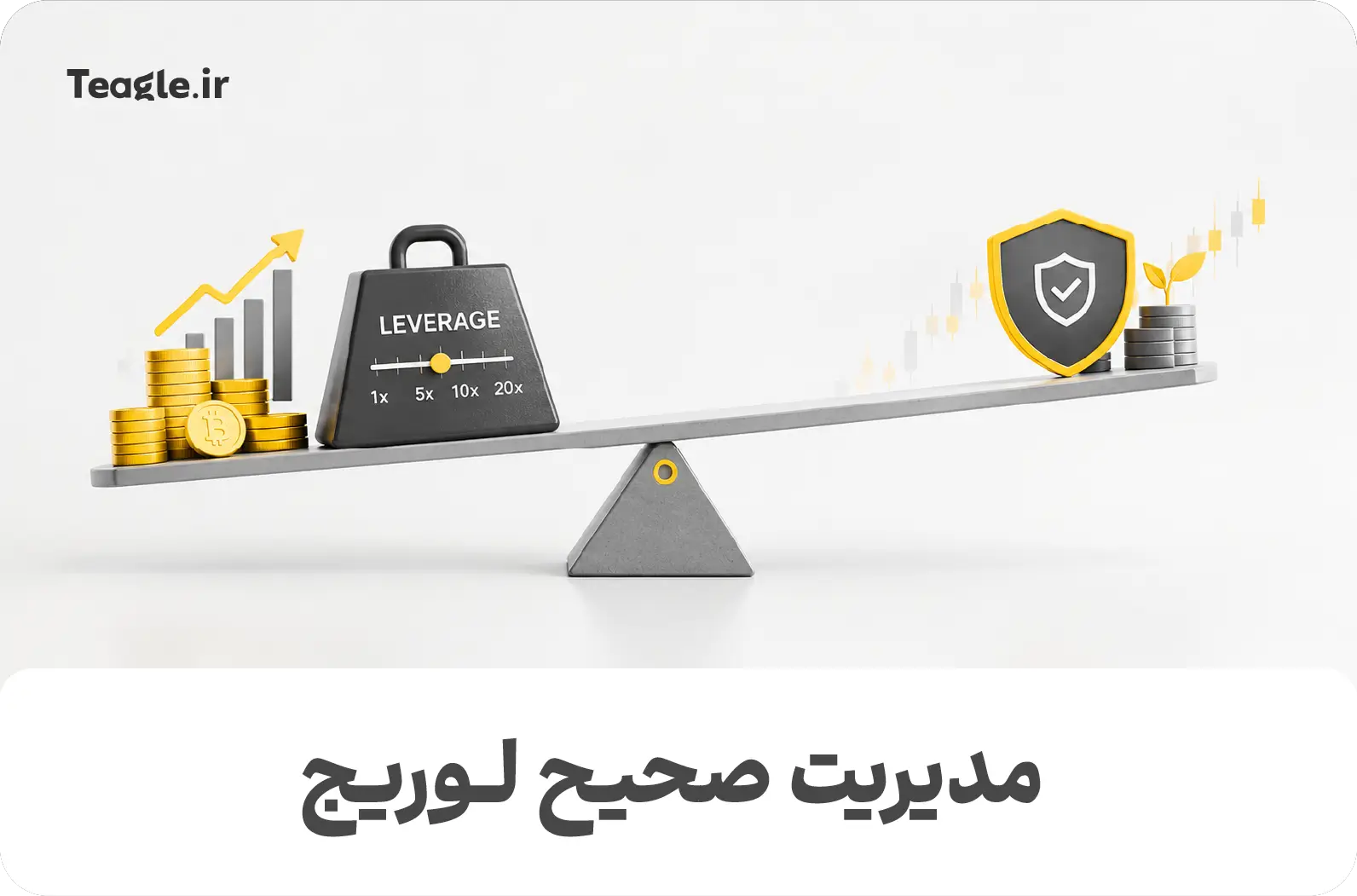
6. Proper leverage management
Using leverage in proportion to the trader's experience and capital size has a direct impact on risk management. In other words, we use leverage in our trades to increase our potential profit, not to take on multiplied risk. Proper leverage management, alongside other variables, prevents heavy pressure on capital.
7. The 6 percent rule: total loss limit over a period
In addition to limiting risk per trade, a loss limit should also be set for a period of time (for example, one day or one week). The 6 percent rule states that if the account's total loss over a given period reaches 6 percent, trading should stop to prevent further losses and emotional decisions. This rule can also show up in another form in prop trading risk management, since most prop firmsset specific daily or overall drawdown (Drawdown) limits, and exceeding them can lead to termination of the contract. Of course, keep in mind that this is not a fixed, absolute rule and can be adjusted depending on your trading style and goals.
8. Diversification and not concentrating capital in one asset
A lack of diversification in your portfolio and concentrating capital in a single asset or market sharply increases the risk of losing capital. Portfolio diversification means spreading capital across several assets, markets or trading strategies so that an adverse move in one particular market doesn't affect the whole account.
9. Controlling trading psychology (fear, greed and emotional trading)
Some large losses are rooted in emotional, impulsive decisions. Fear of losing profits, greed for more profit, or trying to quickly recover losses (revenge trading) are among the psychological mistakes in trading. That is why we must make discipline in the trading process and control of our emotions a priority. A disciplined trader has a precise plan before entering any trade and, even in stressful market conditions, will not deviate from it except in special circumstances. Controlling trading psychology may seem like the hardest part of risk management, but in practice it is the most impactful.
10. Logging trades (journal) and backtesting the strategy
Accurately recording every trade in a trading journal, including various information such as the stop loss, take profit, the outcome and so on, allows the trader to identify recurring patterns of mistakes or success. In addition, backtesting a strategy using data from past trades can reduce the risk of that strategy. Backtesting can be done the traditional way as well as with dedicated tools.
Practical risk management tools
Implementing risk and money management standards in trading is difficult without the right tools. That is why there are useful practical tools for financial risk management, which we cover below:
Risk and position size calculator
A risk calculator is a tool that takes inputs such as capital amount, allowed risk percentage and stop loss size, then calculates and shows the exact position size. Using this tool is one of the fastest ways to learn risk and money management in practice and can reduce human error in calculations to some extent.
Enabling the risk-to-reward ratio in MetaTrader and TradingView
Displaying risk to reward in MetaTrader is usually done with the Fibonacci Retracement indicator or other tools, which show the entry, stop loss and take profit levels visually on the chart.
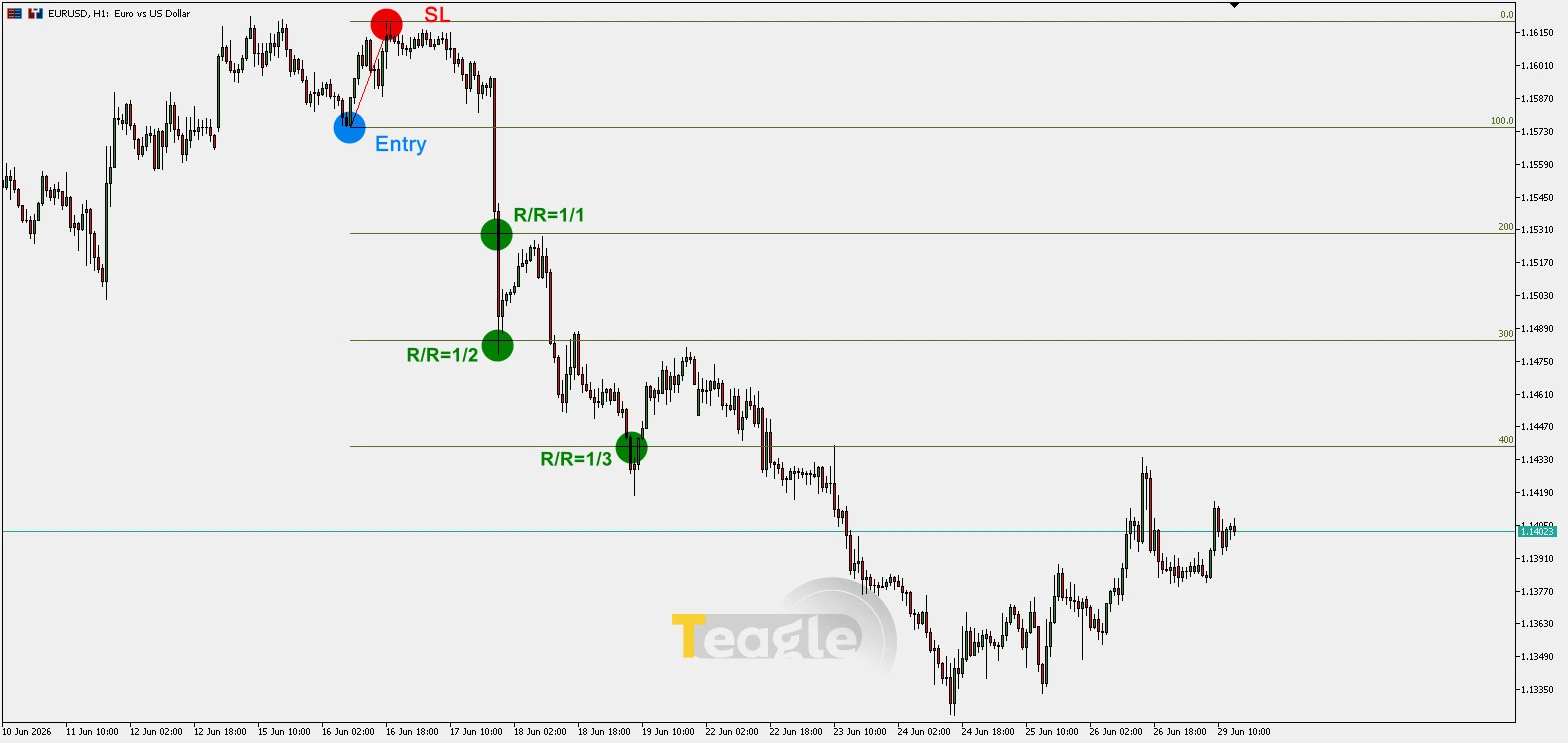
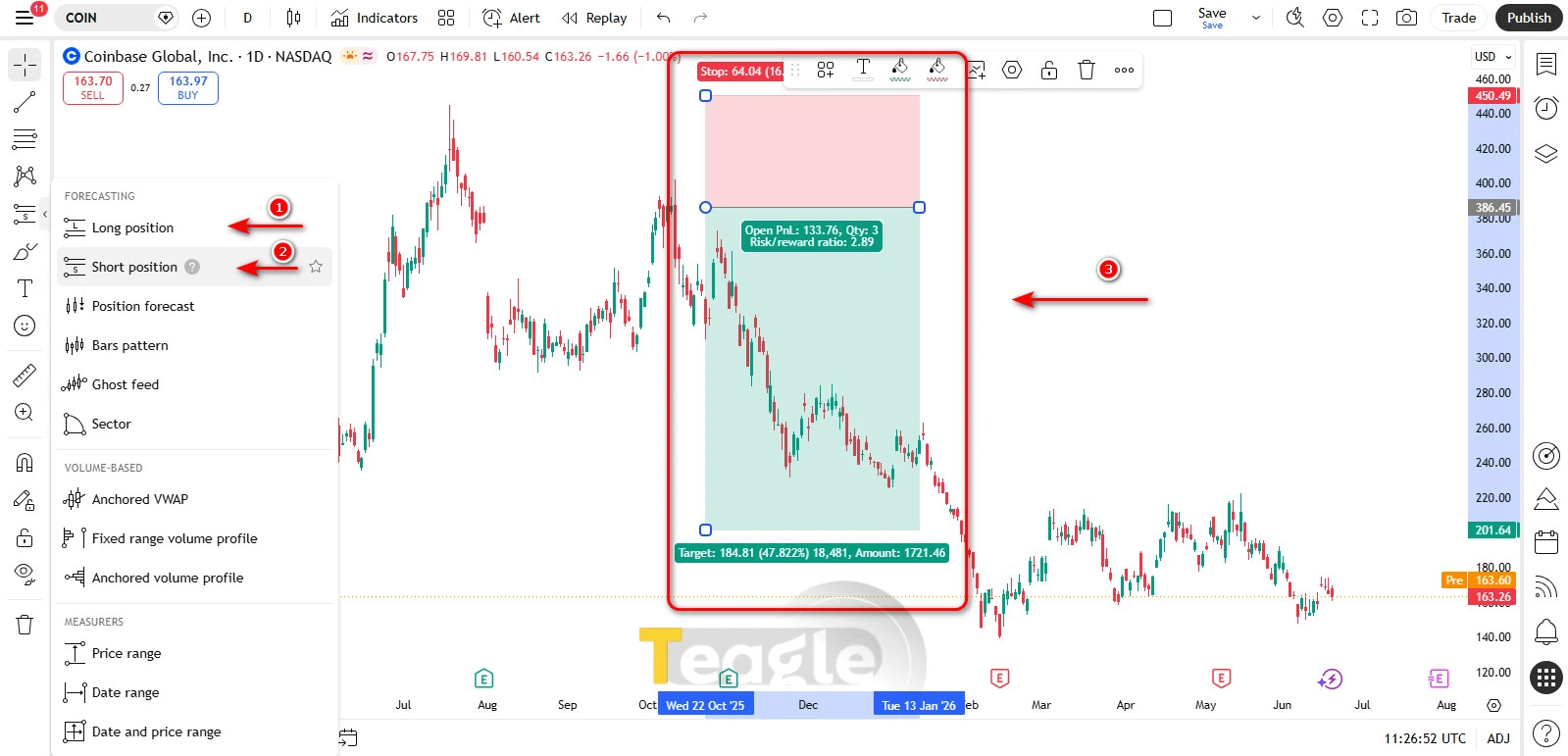
The R/R tool is also available for the risk-to-reward ratio. To enable it, just click Long/Short Position in the left toolbar and select the range you want on the chart to see your risk-to-reward ratio.
Contents of this article


Related articles



User reviews

Newest
 Upload image