How to Use AI in Stock Trading?

Author
Arezoo Ghoochani

Expert review
Mohammadreza Minaei
Published
 2026/09/20
Updated
2026/10/25
Reading time
5 دقیقه


AI in trading can speed up analysis, stock screening and risk control, but it is not a reliable tool for predicting prices with certainty. Its effective use lies mostly in research, data review, pattern recognition and sticking to trading rules, while the final decision, position sizing and trade execution remain the trader's responsibility. This matters even more in funded accounts, because respecting loss limits and the prop firm's rules can be as important as picking the trade.
What does research say about AI and stock market prediction?
Beginner traders often expect AI to name exactly which stock is going to rise. That expectation doesn't match market reality, and chasing it can lead to overtrading and bigger losses. AI can assess the probability of a stock's next move based on available data, but it cannot pin down the final price with certainty. A review of various studies shows that a statistical edge exists in some conditions, but that edge is limited. So it's better to treat AI as a tool for gauging probabilities, not a reliable price predictor.
In fact, no human or AI-based system can predict the entire market with confidence. AI can reduce uncertainty, but it doesn't eliminate it, and market shocks remain unpredictable.
What is the real advantage of AI in trading?
AI's edge shows up mostly in limited, specific conditions, for example, when reviewing stocks of mid-sized and less-followed companies that fewer analysts cover. Even in these segments, the size of the edge is limited and can quickly be wiped out by trading costs.
As a result, it's better to view this small edge as a minor advantage in the analysis process, not a way to eliminate human work and review. Model accuracy figures should also be interpreted with caution, because some of the claims are marketing, and model performance can drop in volatile markets. Using AI properly means supporting the trader's analysis, not replacing it.
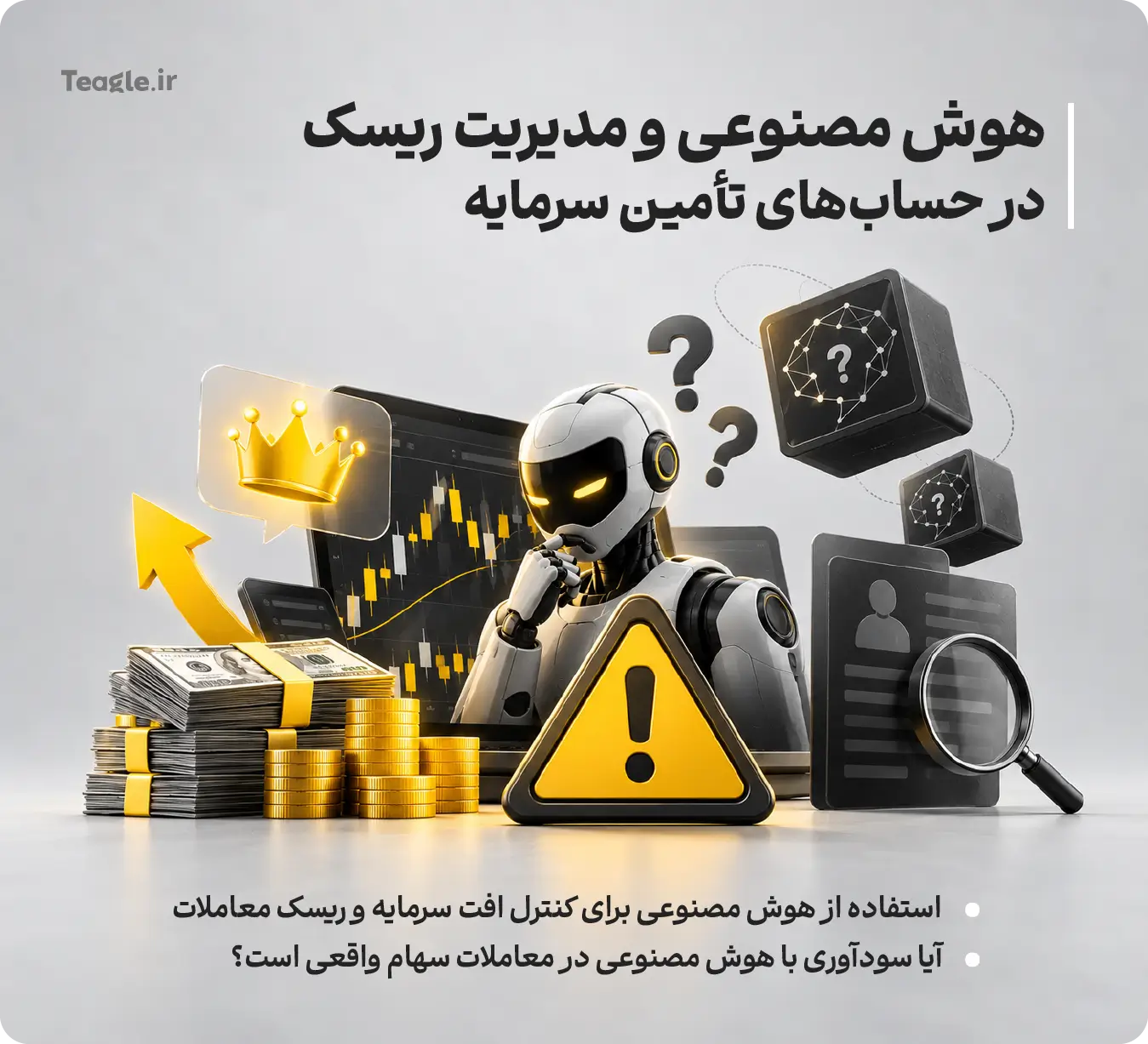
AI and risk management in funded accounts
Using AI to control drawdown and trading risk
In a funded account, the biggest risk isn't necessarily a losing trade. A single revenge trade can quickly push the trader past the daily loss limit. In such situations, AI can be used to enforce rules, check position size, monitor overtrading and remind the trader of risk limits.
According to eToro's Retail Investor Beat report, about 30 percent of US retail investors currently use AI. However, AI's proper role in a funded account should be limited and well defined: the tool can do the research, run the filters and keep the trader committed to their own rules, but direct trade execution is better not handed over to it. This way, AI can be used as a supporting tool for risk control within the prop firm's written rules.
Is making a profit with AI in stock trading realistic?
Profitability depends on the trading strategy, risk management and the trader's discipline, and using AI alone does not remove market risk from a funded account. No tool or algorithm can guarantee profit, and beginner traders may still lose their capital.
AI-assisted risk management is best tested first in demo or paper trading. Promises of passive income and fully automated profits should also be evaluated with serious caution; any tool that promises guaranteed returns without trader involvement is a major red flag.
A practical example of using AI in a $50,000 funded account
To clarify AI's role in risk management, consider a $50,000 funded account with specific risk limits. In this example, AI performs the calculations and checks the setup, but the final order is placed by the trader.
|
Step |
Input parameter and variable |
Formula and calculation |
Result |
|
1 |
Account size: $50,000 |
Specified base capital |
$50,000 |
|
2 |
Maximum overall drawdown: 5% |
50,000 × 0.05 |
$2,500 |
|
3 |
Daily loss limit: 2% |
50,000 × 0.02 |
$1,000 |
|
4 |
Risk per trade: 0.5% |
50,000 × 0.005 |
$250 |
|
5 |
Stop-loss distance: $0.50 per share |
Specified stop parameter |
$0.50 |
|
6 |
Optimal position size |
250 ÷ 0.50 |
500 shares |
|
7 |
Total position value at a $30 entry price |
500 × 30 |
$15,000 |
In this example, AI can confirm the setup, calculate position size and warn about the risk buffer. However, it does not place the order, because using third-party automated trading bots is prohibited in Trade The Pool funded accounts.
What are the limitations of AI in stock trading?
Personal use of AI for trading is not illegal in itself in regulated markets such as the United States and the European Union, as long as the rules are followed. However, fraud, market manipulation and unauthorized money management remain illegal, and bodies such as the SEC, CFTC and FCA oversee this area.
A legitimate trading bot is software that connects to the trader's own trading or brokerage account. If a tool asks the user to deposit funds directly into a proprietary account, it should be treated with extreme caution.
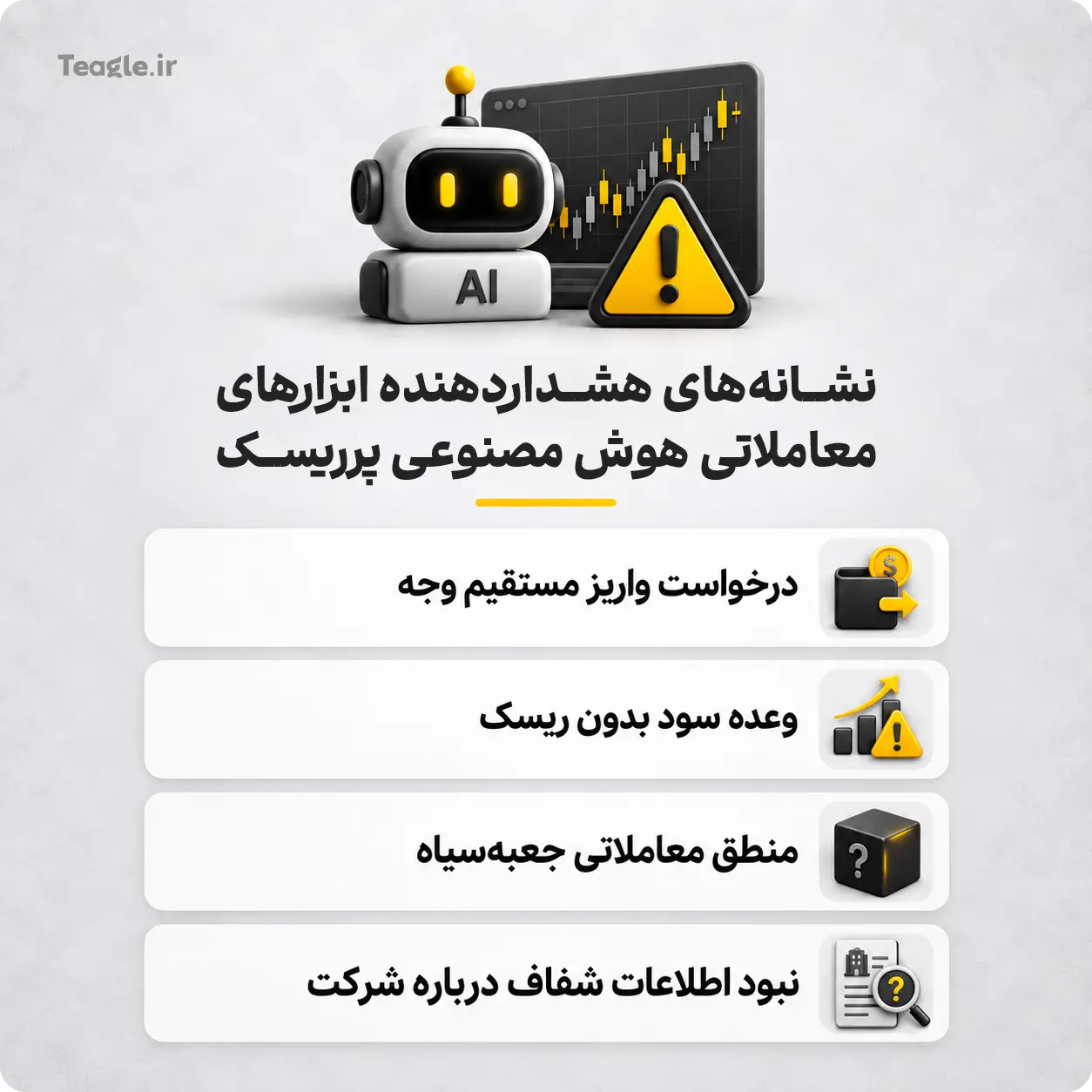
Warning signs of high-risk AI trading tools
|
Warning sign |
What you see |
Why it matters for protecting your capital |
|
Request for direct deposit of funds |
Instead of connecting to a regulated broker, the platform asks you to deposit funds directly to its website or account. |
Legitimate automated tools should connect to your own broker through defined channels such as an API. |
|
Promise of risk-free profit |
Fixed daily profits, guaranteed returns or unrealistic win rates are advertised. |
No trading software or algorithm can guarantee market profits. |
|
Black-box trading logic |
The provider gives no clear explanation of how signals are generated or how the model works. |
A completely unverifiable system cannot easily be audited with real money. |
|
Lack of transparent company information |
The legal identity, company registration or legal risk disclosures are unclear. |
This can be a sign of operating without adequate oversight, or of fraud. |
Why trader control over AI trading matters
In the near future, AI won't necessarily replace traders; rather, it can enhance their abilities by processing information faster and handling analytical work. On the other hand, AI models lack human judgment and may perform poorly in unusual conditions or sharp market shifts.
funds Hedge funds and professional trading desks also use AI for analysis, execution and risk management, but maintaining human oversight is still important. Therefore, the trader should validate AI signals and outputs before using them and take responsibility for the final decision.
How to use AI well in stock trading
AI is not meant to identify the winning stock with certainty, and its main value doesn't lie in such a promise. AI's real use is mostly in research, faster information processing and helping maintain trading discipline.
AI can analyze data, screen stocks and help enforce trading rules, but in a professional process, position sizing, the final decision and respecting risk limits remain the trader's responsibility. Also, using automated bots is prohibited in Trade The Pool funded accounts, and this restriction should be taken into account when designing the trading process.
To reduce risk, any new AI tool is best tested first on a demo account or through paper trading, and only moved toward real capital after its performance has been evaluated. Ultimately, AI is most useful when it is used as an analytical and control assistant, that is, a tool to strengthen the trading process, not a replacement for the trader's judgment and responsibility.
Article source: Trade The Pool | How to Use AI for Stock Trading: A Practical Guide for Funded Traders
Contents of this article


Related articles


User reviews

Newest
 Upload image