
The Concept of Stop Loss in Financial Markets and How to Set a Stop Loss

Author
Admin
Published
 2026/05/31
Updated
2026/10/25
Reading time
5 دقیقه


The concept of stop loss in financial markets and how to set a stop loss
Trading in financial markets always involves both profit and loss. The fundamental difference between a professional trader and a beginner lies in their ability to manage losses and preserve capital and profit. That is why the concept of stop loss, risk management and … take on a more prominent role in trading strategies in financial markets. In this article, we try to take a comprehensive look at the concept of stop loss and related topics, including the types of stop loss, how it differs from stop out and stop limit, and how to set and calculate a stop loss.
What is a stop loss?
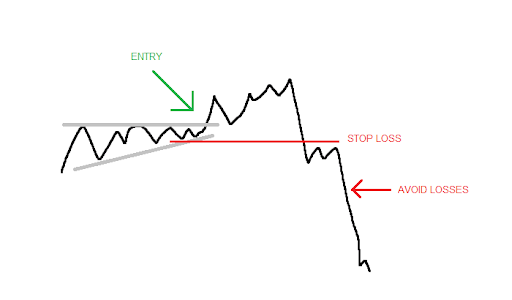
Simply put, a stop loss is a type of automatic conditional order that a trader places with a broker or exchange so that, if the price moves against the forecast, the trade is closed at the specified price (the stop loss) or, due to slippage, at a different price. Knowing what a stop loss is, we can understand the fundamental purpose of this mechanism: creating a barrier against losing capital in the face of severe volatility. From a market psychology perspective, activating a stop loss also keeps the emotions of fear and greed away from the trader. Below, we look at stop loss in different financial markets.
Stop loss in the forex market
Because of its high liquidity and the availability of leverage, the forex market is an extremely sensitive environment. For this reason, a stop in forex can play an important role in determining a trader's results. For example, in scalping, since small fluctuations combined with high leverage can affect the account balance, the stop loss in forex is calculated with various variables in mind. In general, placing a stop loss in forex is based on analyzing market structure and identifying supply and demand, so that momentary, short-term market noise does not needlessly wipe out the trader's capital.
Stop loss in the crypto market
In the crypto market, given the influence of various fundamental variables and its lower liquidity, we sometimes see extreme price behavior and second-by-second volatility in some cryptocurrencies. A stop in crypto can, to some extent, help the trader manage sudden drops. A stop loss in crypto helps us preserve our capital on crypto exchanges during market volatility and sell-offs.
Setting a stop loss in the stock market
In the Iranian stock market, a control band called the «daily price fluctuation limit» has given a prescribed structure to how stop losses are set. When the market suffers consecutive declines, heavy sell queues practically reduce market liquidity to a minimum, and setting a stop loss in the usual way may not work. In these conditions, professional traders design their stop loss method in the stock market so that they reduce their positions in steps before the share price hits the bottom of the daily fluctuation limit (currently 3 percent) and gets locked in a sell queue.
Take profit (TP) vs. stop loss
Setting a stop loss and take profit can help us manage the risk of our trading positions. Just as the stop loss is responsible for containing our losses, the TP helps us automatically lock in and realize floating profits before a sudden price reversal. Combining the take profit and stop loss methods produces the risk-to-reward ratio (Risk/Reward Ratio). This ratio shows how many units of return a trader is willing to seek for each unit of risk. In the table below, we compare stop loss and take profit:
|
Stop loss |
Take profit |
|
|
Purpose |
Controlling and limiting floating loss |
Locking in profit before a price reversal |
|
Placement in a buy (Long) position |
Below the entry price |
Above the entry price |
|
Placement in a sell (Short) position |
Above the entry price |
Below the entry price |
Types of stop loss in financial markets
The varied price behavior of different assets has led to various methods for defining and implementing a stop loss. In general, traders manage their stop loss in two main ways:
Trailing stop loss
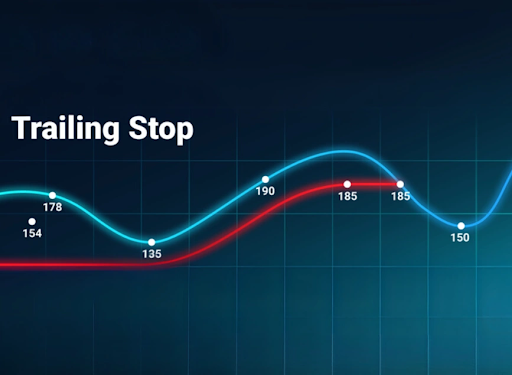
A trailing stop loss (Trailing Stop) is a dynamic stop loss that moves automatically as the price moves in the profitable direction, following it at a set price distance, and if the price reverses, it closes the trade at the last recorded level. For example, in a buy position, whenever the price rises, the trailing stop rises with it. But if the price changes direction and falls, the trailing stop stays locked at its last recorded level. So this tool helps us lock in our floating profits step by step without tying our hands.
A very important technical point for traders is that on most trading platforms, such as MetaTrader 4 and MetaTrader 5, the trailing stop is a client-side command. This means that for this stop loss to move automatically, our trading platform must be open and connected to the internet. If the platform is closed or the internet connection drops, the command stops and our stop loss becomes an ordinary fixed stop loss, unless we use a virtual private server (VPS).
Static stop loss
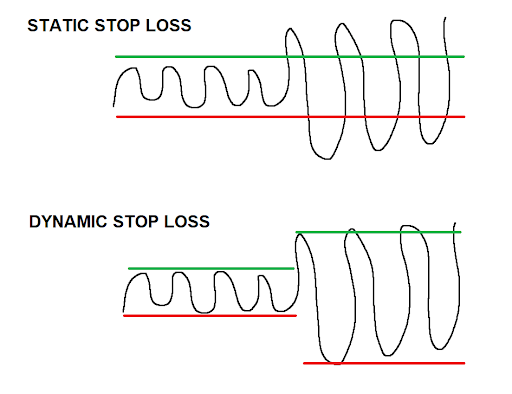
A static or fixed stop loss is the simplest form of stop loss, in which the trader sets a specific price as the final exit point and does not change it. Clearly, this type of stop loss lacks the flexibility to deal with all kinds of sudden volatility. Still, it gives us peace of mind that the order will be stopped if the price reaches our specified level.
Although this type of stop loss lacks the dynamism of methods such as the trailing stop loss and does not move with the price, it brings the highest level of personal discipline to our trading strategy. Because the order is fixed, we can be sure that the account's ultimate risk is fully limited and isolated. As a result, even when sudden, sharp volatility hits the financial markets, our emotions will not lead us to move the stop loss manually, and the trading position will be closed exactly when the specified level is touched, preventing further losses.
What is the difference between stop loss, stop out and stop limit?
Many of us have questions about distinguishing between stop loss (Stop Loss), stop out (Stop Out) and stop limit (Stop Limit), so in this section of the article we explain the difference between each of them.
- Stop Loss: An optional condition set by the trader based on money management calculations, so that if the market moves in the opposite direction, contrary to the forecast and analysis, their trading position is closed with a defined loss.
- Stop Out: A fully mandatory process carried out by the broker or exchange. When the account's margin level (Margin Level) reaches a critical threshold due to heavy losses, the broker or exchange automatically liquidates open positions, starting with the biggest losers, to prevent the account balance from going negative.
- Stop Limit: A two-step conditional order in which the user sets a stop price (Trigger Price) as the condition for activating the order and a limit price (Limit Price) as the price boundary for the trade. When the market touches the stop price, the limit order is activated and is filled only if the market price is within the specified limit price or better.
The importance of setting a stop loss (Stop Loss) in financial market trading
Financial markets are inherently unpredictable, and no analysis or technical algorithm can fully guarantee future prices. The importance of setting a stop loss is that it helps us manage our losses instead of stressing about losing capital. Without a stop loss, a trader practically exposes all of their assets to high risk.
As mentioned, each financial market has its own behavior. For example, in the currency pair market (forex), the combination of high liquidity and leveraged trading requires us to use the stop loss mechanism for the survival of our account and capital. In the crypto market, too, because of price gaps and the possibility of stop loss hunting, or stop hunting (Stop Hunting), we must place our stop loss very intelligently and beyond obvious liquidity levels (in technical terms, behind the whales' price magnets) so that we are not caught by fake shadows (Shadow) and exit trades prematurely.
How to set a stop loss and calculate it in a trade
In financial markets, learning how to set and calculate a stop loss is especially important, whether in the spot market or in futures and leveraged markets. Below, we cover the factors involved, key strategies and common mistakes traders make when setting a stop loss.
Factors that affect setting a stop loss
Calculating and setting a stop loss should not be based on guesswork; it depends on the following structural variables:
1. Financial risk: First, we need to decide how much of our total account balance we are willing to put at risk in a trade.
2. Asset volatility: Highly volatile assets in financial markets need wider stop losses.
3. Technical chart structure: Key support and resistance levels, candlestick patterns and trend lines set the boundaries for where we place our stop loss.
4. Timing and timeframe: Short-term trades (scalping) have much tighter stop losses than medium-term (swing) trades.
Key strategies for placing a stop loss
For a stop loss to really work for us, we need to set it based on market logic and risk management. Choosing the right stop loss location helps us control potential losses and lets traders stay in the market with more peace of mind.
Stop loss based on support and resistance
Place the stop slightly below support when buying and slightly above resistance when selling, so that normal market fluctuations don't push us out early.
Stop loss based on a fixed risk percentage
In each trade, we first decide how much of our capital we are willing to risk, for example 1 to 2 percent. Then, based on that allowed risk, we set the stop loss location and then adjust the trade size accordingly. That said, this isn't really a strategy; all stop loss methods depend on the allowed loss. In other words, we first decide how much of our capital we are willing to risk, then set the stop loss location based on our strategy, and then determine the trade size.
Stop loss based on market volatility
When the market is volatile, the stop loss should be wider, and in a low-volatility market it can be closer to the price. This keeps the stop in line with actual price behavior. The ATR indicator can be a useful tool for measuring market volatility. Using this indicator, we can set the stop loss according to the strength of price movement so it is neither too close to nor too far from the trading position.
Stop loss beyond the last valid high or low
Placing the stop beyond important price structures, such as the last low when buying or the last high when selling, gives the trade technical logic.
Trailing stop loss (Trailing Stop)
As mentioned, as the price moves in the direction of profit, the stop moves too, so that part of the profit is locked in.
Mistakes to avoid when setting a stop loss
Traders make recurring mistakes when using stop losses that hurt their overall returns. Below, we go over them to help avoid repeating them:
1. Placing stops too close
Traders often place their stop loss very close to the entry price to reduce dollar risk. As a result, normal fluctuations and market noise quickly hit our stop loss and close the trade.
2. Moving the stop loss back or further away during a trade
The worst trading mistake is when, as the price approaches the stop loss, the trader moves the stop further back due to emotional pressure and refusing to accept defeat. This behavior acts like a virus in our strategy and eventually leads to much bigger losses.
3. Setting a stop loss based on arbitrary, made-up numbers
The stop loss price should be based solely on careful technical analysis, chart structure, or volatility-measuring indicators such as ATR. Placing a stop loss based on arbitrary numbers or fixed formulas with no basis, such as always setting it 50 pips or 3% below the entry price, is completely wrong; the market has no obligation to our made-up numbers, and the stop loss should be at a point that formally invalidates the analysis.
FAQ about stop losses in financial markets
What is a floating stop loss?
A floating stop loss, also known as a trailing stop loss (Trailing Stop Loss), is a type of stop loss that, unlike a fixed one, moves with the price in the direction of profit. It lets the trader protect capital and close the order at the last recorded level if the trend reverses, without giving up larger gains.
What is the formula for calculating a stop loss with ATR?
The ATR indicator measures market volatility and can be used to determine the stop loss distance. In a buy trade, the stop loss is usually the entry price minus ATR times a set multiplier, and in a sell trade, the entry price plus the same amount. This method helps align the stop loss with actual market volatility, but it does not guarantee success or fully prevent the stop from being triggered.
$$\text{Stop Loss (Long Position)} = \text{Entry Price} - (\text{ATR} \times \text{Multiplier}) [8, 24]$$
$$\text{Stop Loss (Short Position)} = \text{Entry Price} + (\text{ATR} \times \text{Multiplier}) [6, 24]$$
In this formula, the multiplier is usually a number between 1.5 and 2.5, chosen based on the trader's risk tolerance. For example, if the entry price of an asset is 1000 Toman, the current ATR is 20 Toman and the multiplier is 2, the stop loss for a buy trade is set at 960 Toman:
$$1000 - (20 \times 2) = 960 [24]$$
This systematic method ensures the stop loss is set in line with the inherent volatility of the stock or currency pair and isn't triggered by the slightest natural market turbulence.
How do you set a stop loss with Fibonacci in forex trading?
Setting a stop loss with Fibonacci in forex usually means placing the stop slightly beyond important retracement levels so that normal price fluctuations don't cause an early exit and close the order. For example, if you enter at a level like 50 percent, the stop loss is usually placed beyond the next level, such as 61.8 or 78.6 percent, so that a valid break of the level serves as the exit signal. This approach is useful for risk management and capital protection, but the source itself stresses that Fibonacci is best used alongside other analysis and with a carefully chosen entry point.
To explain it in more practical terms, setting a stop loss with the Fibonacci Retracement tool means placing the stop at a safe distance beyond the tool's key levels so that normal price fluctuations and pullbacks don't push us out of the market early. To apply this strategy properly, the stop loss location must be fully aligned with the entry point to maintain a reasonable risk-to-reward ratio:
Scenario one (entry at middle levels)
If you enter a trade at the 50% Fibonacci level, the stop loss should be placed with a small margin just beyond the next level, 61.8%; a valid break of the 61.8% level means the scenario of a price reversal from the 50% level is invalidated.
Scenario two (entry at golden levels)
If the trader enters at deeper levels such as 61.8 or 78.6 percent, the stop loss can be set more confidently beyond the 100% level (the starting point of the wave). Price moving past the 100% level means the previous trend has completely failed.
This geometric approach is very effective for containing risk, but we always recommend not relying on Fibonacci levels alone and placing your stop loss where it overlaps (Confluence) with trend lines, order blocks or classic support and resistance levels on the chart.
Why doesn't my stop loss work?
Many traders think stop losses don't work; but in reality their job is to prevent bigger losses, not to guarantee profit. Most of the time, the problem is placing the stop loss too close to the entry point, not monitoring market volatility, or trading during major news, which causes sudden price spikes. So if a stop loss isn't set based on sound analysis and at a reasonable distance from market structure, you could say it really won't work.
Contents of this article


Related articles



User reviews

Newest
 Upload image